
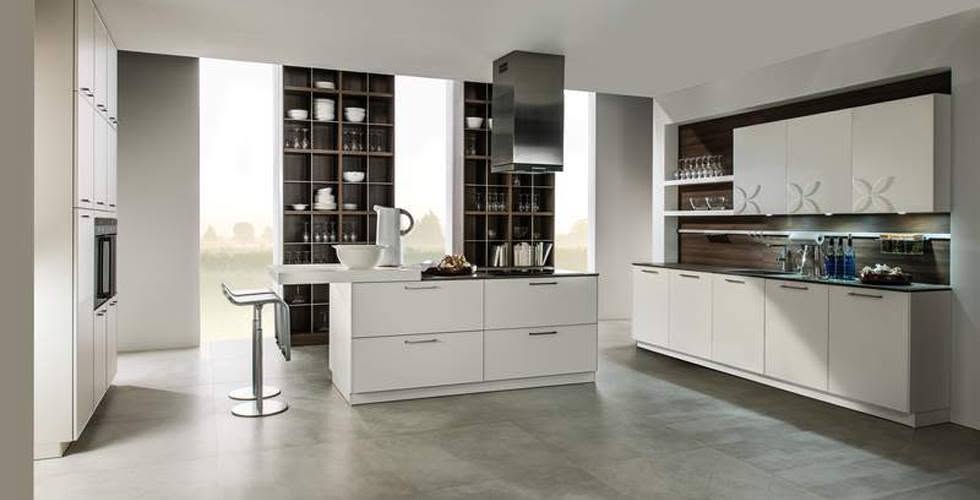
The Los Angeles remodeling market is competitive and crowded with contractors who vary widely in quality and reliability. Choosing the wrong cabinet maker leads to expensive change orders, poor fit, and project delays. Understanding what separates a qualified custom cabinet maker from a risky hire is the most important step before any work begins.
Key Takeaways
Cabinet type directly affects fit, material quality, lead time, and total cost. Mismatched selection leads to poor customization, unnecessary overspending, or a result that doesn't suit the space.
Stock Cabinets are pre-manufactured in standard sizes and stored until purchase. They use particleboard boxes with laminate veneers or thermofoil finishes. Sized in 3-inch increments, they offer limited fit flexibility and range from $100 to $300 per linear foot. Stock cabinets account for approximately 30% of the market and work best for straightforward kitchens with standard dimensions and tight timelines.
Semi-Custom Cabinets are manufactured from pre-designed components but allow modifications in dimensions, finishes, and interior organization. They feature plywood or solid wood boxes with higher-quality hardware. Modifications are available in 1-inch increments, providing more flexibility than stock options. Semi-custom cabinets cost between $200 and $900 per linear foot and hold approximately 46% of the market share. Lead times run 4 to 12 weeks, making them ideal for homeowners who want more design control without full custom pricing.
Custom Cabinets are built from scratch to exact specifications with unlimited design possibilities. They use premium materials, including solid hardwoods with traditional joinery methods like mortise-and-tenon or dovetail. Custom cabinets range from $500 to $2,500 or more per linear foot and capture approximately 20% of the market. Lead times extend 8 to 16 weeks, making custom work best for unique spaces, high-end finishes, and homeowners who won't compromise on fit or material quality. Understanding these distinctions helps homeowners select custom cabinet makers in LA who match their project requirements.
The LA market presents unique challenges that make vetting a cabinet maker more critical than in other markets. Consumer preferences vary widely across neighborhoods and buyer profiles.
LA Consumer Preferences to Be Aware Of: Gen Z buyers show a 55% preference for a consistent design style throughout the home. Younger Millennials follow at 50%, preferring a consistent design style. Urban dwellers tend to prefer flat-panel thermofoil or glass designs, while suburban homeowners typically choose traditional or transitional styles with large islands. HGTV serves as a primary design inspiration source for 46% of LA homeowners.
What's at Stake When You Choose Wrong: Poor contractor selection is the single largest driver of project cost overruns and delays. Choosing based on price alone leads to expensive change orders after work begins. Accepting vague estimates without detailed contracts leaves homeowners with no recourse, and overlooking kitchen-specific experience results in functional and aesthetic failures that are costly to correct.
These are the most common and costly hiring mistakes LA homeowners make. Each red flag below represents a clear signal to walk away or ask harder questions before signing anything.
Red Flag 1: No Detailed Written Contract or Proposal — Vague estimates leave room for scope creep and unexpected charges. A legitimate cabinet maker provides an itemized proposal covering materials, finishes, dimensions, labor, and timeline. Verbal-only agreements leave homeowners with no recourse when problems arise.
Red Flag 2: Low Bids That Seem Too Good to Be True — Low bids frequently omit necessary costs such as demolition, electrical updates, and permit fees. What looks like savings upfront typically converts to expensive change orders mid-project. Always compare bids line by line, not just the bottom number.
Red Flag 3: No Warranty Offered — Any reputable cabinet maker stands behind their work with a written warranty. Contractors who do not offer warranties signal limited confidence in their own materials or installation. Ask specifically what is covered, for how long, and what voids the warranty.
Red Flag 4: No Verifiable Kitchen-Specific Experience — General contractors without cabinet-specific expertise frequently make errors in measurement, sequencing, and appliance coordination. Ask for a portfolio of completed kitchen installations, not just general remodeling work. Verify the contractor's license number and insurance certificates before any conversation about scope or pricing.
Red Flag 5: Inability to Confirm Who Will Actually Do the Work — Some contractors bid jobs and then hand them off to subcontractors with no oversight. Always ask directly who will be on-site and whether the same crew will complete the full installation. Inconsistent crews are a leading cause of quality gaps mid-project.
Red Flag 6: No References or Portfolio of Similar Installations — A cabinet maker who cannot provide examples of comparable projects is an unknown risk. Request references from past clients and follow up on them. Photos alone are not sufficient; ask about timelines, change orders, and whether the final result matched the original proposal.
Even a good cabinet maker can't fix planning errors that originate with the homeowner. These mistakes are most damaging when combined with a contractor who lacks the expertise to catch them early.
Wood remains the dominant cabinet material, holding approximately 72% of the market. Metal cabinetry is a growing segment with a projected 6.37% CAGR through 2031. Quality construction uses solid wood boxes, dovetail or mortise-and-tenon joinery, and formaldehyde-free materials. Particleboard boxes with thermofoil veneers are an indicator of stock-grade quality regardless of how a product is marketed.
Check license status through the California Contractors State License Board. Confirm insurance certificates are current, covering both general liability and workers' comp. Review third-party platforms like Houzz, Google, and Yelp for patterns in complaints, not just star averages. Ask specifically about projects of comparable scale and complexity to yours when evaluating Los Angeles cabinetry services.
Written warranty coverage signals confidence in both materials and installation quality. Clarify exactly what is covered, including cabinet boxes, hardware, finish, and installation labor. Ask what actions or conditions void the warranty before signing.
Is the proposal fully itemized, listing materials, finishes, dimensions, hardware, labor, and timeline? How are change orders handled, and what triggers additional costs?
Who will be on-site performing the installation — direct employees or subcontractors? How is quality control managed across the project?
Can you provide examples of similar custom installations in comparable spaces? Can I speak with past clients whose projects match the scope of mine? These questions help homeowners understand a cabinet maker’s reputation and track record before committing to a contractor.
Stock cabinets offer immediate availability; semi-custom requires 4 to 12 weeks; fully custom runs 8 to 16 weeks. Semi-custom offers a strong balance of personalization and cost relative to both stock and fully custom options. The lowest price rarely reflects the true cost once change orders, corrections, and replacements are factored in.
Custom makes the most sense for non-standard spaces, high-end finishes, and homeowners with specific material or sustainability requirements. The unlimited design flexibility of custom comes with a requirement for detailed upfront planning. A contractor who rushes this phase is at risk, as common mistakes homeowners make with kitchen cabinets often stem from insufficient planning time.
Request a line-item breakdown for every cost category, including materials, fabrication, delivery, installation, and permits. Confirm what is and is not included in demolition and disposal. Ask for a clear change order policy in writing before work begins, and consider how cost-effective cabinet production balances quality with budget constraints.
Confirm the contractor's license number through the CSLB. Request current insurance certificates covering general liability and workers' comp. Check for complaints or disciplinary actions on record.
Require a fully itemized proposal before agreeing to anything. Ensure the contract specifies the scope of work, materials, timeline, payment schedule, change order policy, and warranty terms. Never proceed on a verbal agreement, and prepare questions to ask potential custom cabinet makers before the first meeting.
Install upper cabinets before base cabinets — upper-first installation prevents damage to lower units and ensures proper wall anchoring. Account for wall thickness, cabinet material thickness, and filler space in all measurements. Confirm exact appliance dimensions, ventilation requirements, and door swing clearances before cabinet dimensions are finalized to avoid common mistakes in kitchen cabinet remodeling projects in LA.
Choosing the best custom cabinet maker in Los Angeles comes down to three things: verified quality, demonstrated experience, and clear communication before any work begins. The red flags covered in this article — vague contracts, suspiciously low bids, no warranty, unverifiable experience — are consistent across failed projects. Homeowners who vet contractors carefully, ask the right questions, and get every detail in writing before signing are the ones who end up with cabinets that last.
For over 30 years, Bradco Kitchens & Baths has helped Los Angeles homeowners make informed decisions about custom cabinetry. Our in-house factory and design-build process eliminates the coordination challenges that lead to project delays and budget overruns.
You've done the hard part — learning what separates a reliable custom cabinet maker from a costly mistake. The next step is finding a partner who can answer every question this article raises with proof, not promises.
Bradco Kitchens & Baths has built custom cabinets for Los Angeles homeowners since 1987. We are fully licensed and insured, with our own LA cabinet factory, solid wood construction with dovetail joinery, formaldehyde-free CARB-compliant materials, and a full design-to-installation team under one roof. Every project starts with a written scope, line-item pricing, and our 100% satisfaction guarantee.
Ready to start your kitchen remodel with a trusted partner? Contact us today to schedule a consultation and see how our full-service approach protects your investment from day one.
 Jessica Kienzl
BOOK AN APPOINTMENT