
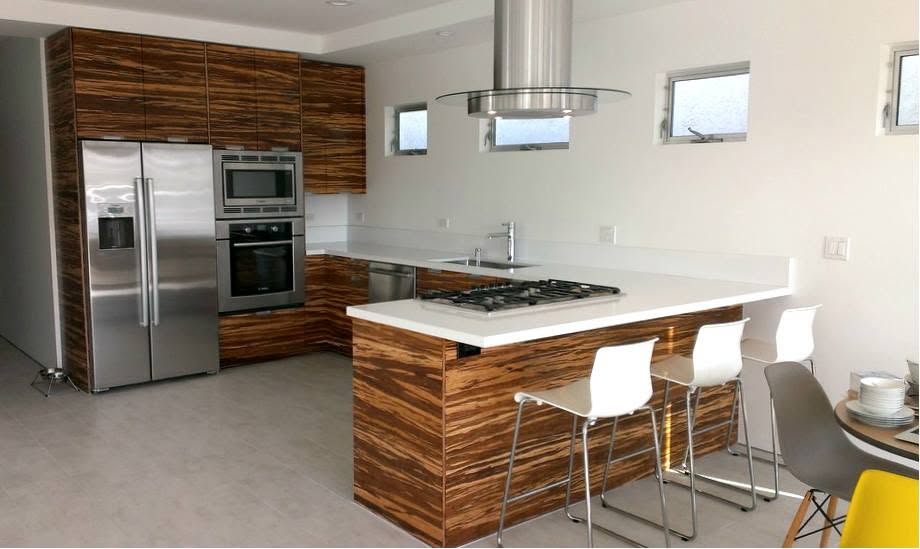
Kitchens serve as the heart of the home where families gather to prepare meals and create memories. Choosing sustainable kitchen materials and non-toxic construction methods protects both family health and environmental resources while delivering lasting value.
The global kitchen cabinetry market has reached $72.31 billion and continues expanding at 8.26% annually through 2033. This growth reflects rising consumer demand for healthier living spaces and responsible material sourcing across all demographic groups.
Key Takeaways
Sustainable materials meet environmental and health standards through responsible sourcing and low-emission manufacturing processes. These materials reduce indoor air pollution while supporting forest conservation and waste reduction initiatives.
Solid wood cabinets use traditional joinery techniques like dovetail joints and contain no synthetic adhesives. Manufacturers construct these cabinets entirely from lumber harvested through responsible forestry management programs.
Recycled materials incorporate wood fibers, agricultural waste, including straw and sugarcane bagasse, and reclaimed plastics. Market examples demonstrate how recycled wood and plastic foils create functional, eco-friendly kitchen cabinets for sustainable LA living, while wood maintains a 52.3% market share.
Low-VOC cabinets eliminate harmful emissions by using MDI glue instead of formaldehyde-based adhesives. Water-based and plant-based coatings further minimize chemical release into home environments.
Non-toxic cabinetry for your kitchen carries a 15-30% cost premium but protects respiratory health and reduces chemical sensitivity. These products create a healthy cooking environment free from persistent odors and off-gassing.
GreenGuard Gold certification verifies that products emit minimal volatile organic compounds during their lifespan. This standard protects indoor air quality by testing materials under realistic conditions.
FSC certification confirms responsible forest management and sustainable harvesting practices throughout the supply chain. Homeowners should verify both GreenGuard Gold for emissions and FSC-certified cabinets for environmental stewardship.
Certification Standards at a Glance
| Certification | What It Verifies | Why It Matters |
| GreenGuard Gold | Minimal volatile organic compound (VOC) emissions, tested under realistic indoor conditions | Protects indoor air quality and reduces chemical exposure |
| FSC Certification | Responsible forest management and sustainable harvesting practices across the supply chain | Confirms environmental stewardship and traceable sourcing |
Consumers increasingly recognize that material choices directly impact family health and environmental quality. Eighty percent of homeowners now evaluate environmental factors when selecting cabinetry and fixtures.
Environmental impact ranks as the primary consideration for 80% of consumers researching kitchen materials. Health and safety concerns drive 70% of buyers toward products with low-VOC finishes.
Easy maintenance appeals to 60% of homeowners who value practical functionality alongside environmental benefits. Durability matters to 45%, while visual appeal influences 30%, and cost drives 20% of decisions.
Millennials account for 40% of kitchen renovation spending and show 15% higher investment in sustainable materials. This generation leads the adoption of green material sourcing and environmental certifications.
Generation X represents 25% of renovation budgets and balances sustainability with traditional durability standards. Baby Boomers contribute 35% of spending with budgets exceeding $8,000 per project, favoring premium solid wood.
Urban consumers prioritize space-efficient designs and low-VOC materials due to smaller living spaces and air quality concerns. These homeowners face higher installation costs but have access to specialized eco-friendly products.
Rural buyers prefer traditional solid wood designs suited to larger kitchens with lower installation expenses. Limited local availability of specialized green materials presents sourcing challenges requiring advance planning.
Material selection determines cabinet performance, lifespan, maintenance requirements, and environmental impact over decades. Each category offers distinct advantages depending on budget priorities and sustainability goals.
Solid wood cabinets deliver exceptional longevity, lasting 40-50+ years with proper care and maintenance. Construction costs range from $5,000-$25,000+ for standard 10x10 kitchens at $500-$1,200 per linear foot.
These cabinets represent the highest-cost option but support long-term value through repairability and aesthetic appeal. Heavy weight complicates installation while moisture exposure requires regular sealing to prevent damage.
Bamboo regenerates completely within 3-5 years compared to the decades required for hardwood forest maturation. Cabinets constructed from bamboo provide 25-35 years of service at $6,000-$28,000+ for 10x10 kitchens.
FSC-certified wood ensures responsible forestry through verified sustainable harvesting practices and ecosystem protection. Both options cost $200-$800 per linear foot, with limited regional availability requiring certification verification.
Recycled and composite materials transform waste into functional cabinetry while reducing landfill burden and resource extraction. Pricing ranges from $4,000-$22,000 for standard kitchens at $150-$600 per linear foot.
Composite and particleboard options last 8-15 years but remain vulnerable to moisture damage and repair difficulties. Limited aesthetic variety and durability concerns make these affordable and green cabinetry options better suited to budget-conscious projects.
Sustainable Cabinet Material Comparison
| Material | Lifespan | Cost per Linear Foot | Standard 10x10 Kitchen Cost |
| Solid Wood | 40-50+ years | $500-$1,200 | $5,000-$25,000+ |
| Bamboo / FSC-Certified | 25-35 years | $200-$800 | $6,000-$28,000+ |
| Low-VOC / Formaldehyde-Free Plywood | 18-25 years | $200-$800 | $5,000-$30,000+ |
| Recycled / Composite | 8-15 years | $150-$600 | $4,000-$22,000 |
Material lifespan directly affects replacement frequency, waste generation, and total ownership costs over time. Understanding durability differences helps homeowners make informed decisions, balancing upfront investment with long-term performance.
Solid wood cabinets provide 40-50+ years of service when properly maintained and sealed against moisture. Bamboo alternatives deliver 25-35 years while low-VOC plywood performs for 18-25 years.
Composite and particleboard products typically last only 8-15 years due to moisture susceptibility and repair limitations. Proper sealing prevents moisture damage across all wood-based materials, regardless of how long kitchen cabinets last under normal conditions.
Minor kitchen remodels yield 113% ROI nationally, with average costs of $28,458 returning $32,141 at resale. These projects typically involve refacing or replacing cabinet fronts rather than complete reconstruction.
Midrange major remodels return 51% ROI on $82,793 average investments while upscale renovations recover 36%. Sustainable materials enhance resale appeal among environmentally conscious buyers seeking healthy home environments.
Low-VOC and formaldehyde-free cabinets cost $5,000-$30,000+ for standard kitchens at $200-$800 per linear foot. These investments support low-impact kitchen design through reduced environmental harm and improved indoor air quality.
Upscale major remodels averaging $164,104 return 36% ROI but deliver premium aesthetics and durability. Initial cost premiums for sustainable materials are offset through extended lifespans, reducing replacement frequency and waste.
Evaluating materials requires understanding certification standards, construction quality, and maintenance requirements before purchasing decisions. Informed choices prevent costly mistakes while ensuring products meet both environmental and performance expectations.
Cabinet boxes constructed from solid wood or formaldehyde-free plywood ensure structural longevity and indoor air quality. These materials support decades of service when properly specified and installed by experienced professionals.
Water-based finishes offer lower emissions than traditional coatings but may require more careful cleaning and maintenance. Low-VOC options present limited style selections, while recycled materials vary in repairability, and how to choose the best cabinet materials for your kitchen depends on individual priorities.
Refacing existing cabinet boxes with sustainable doors provides budget-conscious updates extending kitchen lifespan cost-effectively. This approach reduces waste by preserving functional cabinet structures while updating aesthetics.
Minor remodels often involve replacing visible surfaces rather than complete demolition and reconstruction. Using low-VOC paints during refacing projects maintains healthy indoor air while refreshing appearances.
Industry experts recommend prioritizing GreenGuard Gold and FSC certifications when evaluating manufacturers' environmental claims. These independent standards verify actual performance rather than relying on marketing statements.
Investing in quality construction materials reduces replacement frequency and total lifecycle costs over ownership periods. Custom kitchen cabinet fabrication allows specification of exact materials meeting health and sustainability requirements.
The global kitchen cabinetry market reached $72.31 billion in 2025, with projections indicating $236.22 billion by 2033. Market expansion reflects 8.26% annual growth driven by urbanization, rising incomes, and environmental awareness.
Alternative valuations estimate $70.59 billion in 2024, growing to $115.64 billion by 2026 across global regions. Sustainable cabinetry adoption has reached 29% among consumers prioritizing health-conscious and eco-friendly construction methods.
Industry benchmarks show major manufacturers expanding environmental stewardship programs across product lines. Mass-market brands increasingly advance sustainability through recycled materials in affordable cabinetry systems.
Industry data shows premium European manufacturers maintaining stringent environmental manufacturing standards and certifications. Established solid wood specialists focus on construction quality and low-VOC finishes.
Asia-Pacific holds 38% market share, growing at 5-7% annually through rapid urbanization and rising incomes. North America maintains a 29% share with 2-3% growth driven by renovation activity and sustainability awareness.
Europe accounts for 18% of global demand, with mature markets advancing environmental standards adoption. Latin America contributes 10%, while the Middle East and Africa represent 5% of the total market value.
Sustainable and non-toxic cabinetry solutions have achieved 29% adoption among consumers renovating kitchen spaces. This growth reflects increasing awareness of indoor air quality impacts on respiratory health.
Eco-friendly furniture segments project expansion from $47.8 billion in 2023 to $104 billion by 2033. This 8.3% annual growth demonstrates sustained consumer demand for environmentally responsible home products.
Consumer preferences continue evolving toward materials supporting both personal health and environmental stewardship goals. Market trends indicate accelerating adoption of certified sustainable products across all demographic segments.
Cost considerations influence 20% of consumers as the primary decision factor despite growing environmental awareness. This balance reflects efforts to achieve sustainability goals within realistic budget constraints.
Quality certifications increasingly drive purchasing decisions as consumers recognize that the lowest prices often indicate inferior materials. Health-conscious buyers prioritize verified low-emission products over conventional alternatives regardless of premiums.
Material science advances enable manufacturers to create durable products from agricultural waste and recycled content. These innovations reduce dependence on virgin timber while maintaining structural performance standards.
Adhesive technology improvements deliver formaldehyde-free bonding with strength matching or exceeding traditional methods. Manufacturing processes incorporate renewable energy and closed-loop water systems, reducing environmental impact.
Regulatory standards increasingly restrict formaldehyde emissions and volatile organic compound levels in building materials. These policies accelerate the market transition toward healthier products, protecting occupants from chemical exposure.
Building codes and green certification programs create market advantages for manufacturers meeting sustainability benchmarks. Policy frameworks support eco-friendly countertops and cabinetry through incentives and public awareness campaigns.
Sustainable kitchen materials deliver measurable benefits through improved indoor air quality, reduced environmental impact, and long-term durability. Homeowners investing in certified products protect family health while supporting responsible resource management.
The kitchen cabinetry market transformation reflects fundamental shifts in consumer values, prioritizing wellness and environmental stewardship. Quality materials from established manufacturers like Bradco Kitchens & Baths, serving Los Angeles homeowners for more than 40 years, combine craftsmanship with sustainable practices, meeting rigorous health standards.
Informed material selection balances initial costs against lifecycle performance, maintenance requirements, and resale value contributions. Investing in sustainable cabinetry creates healthier living spaces while reducing long-term ownership costs through extended product lifespans.
Ready to design your sustainable kitchen with expert guidance? Contact our team to discuss material options, certifications, and construction methods that align with your health and environmental priorities, or call (323) 936-3457 to request your free quote today.
A. Solid wood and bamboo rank among the most sustainable choices because both last for decades and come from renewable or responsibly managed forests. Solid wood cabinets provide 40-50+ years of service, while bamboo regenerates within 3-5 years compared to the decades hardwood forests require. FSC certification and GreenGuard Gold testing help confirm that a specific product meets sustainable sourcing and low-emission standards before purchase.
A. Low-VOC and formaldehyde-free cabinets typically carry a 15-30% cost premium over conventional options, largely due to specialized adhesives and finishing materials. Standard 10x10 kitchens using solid wood range from $5,000 to $25,000 or more, while bamboo and FSC-certified options run $6,000 to $28,000 or more. The premium offsets over time through longer lifespans and reduced replacement frequency.
A. Formaldehyde-free cabinets use MDI glue and water-based or plant-based coatings instead of formaldehyde-based adhesives, which reduces chemical off-gassing in the home. This matters most for households with children, allergies, or respiratory sensitivities, since these products create a cooking environment free from persistent odors. Homeowners prioritizing indoor air quality generally see the added cost as a worthwhile health investment.
A. Lifespan varies by material: solid wood cabinets last 40-50+ years with proper sealing and maintenance, bamboo alternatives deliver 25-35 years, and low-VOC plywood performs for 18-25 years. Composite and particleboard options last only 8-15 years due to moisture susceptibility. Proper sealing and regular maintenance help every wood-based material reach the upper end of its expected lifespan.
A. GreenGuard Gold certification verifies that a product emits minimal volatile organic compounds under realistic testing conditions, which directly protects indoor air quality. FSC certification confirms that the wood came from responsibly managed forests with sustainable harvesting practices. Checking for both certifications, rather than relying on general marketing claims, gives homeowners independent verification of a product's environmental and health credentials.
 Jessica Kienzl
BOOK AN APPOINTMENT