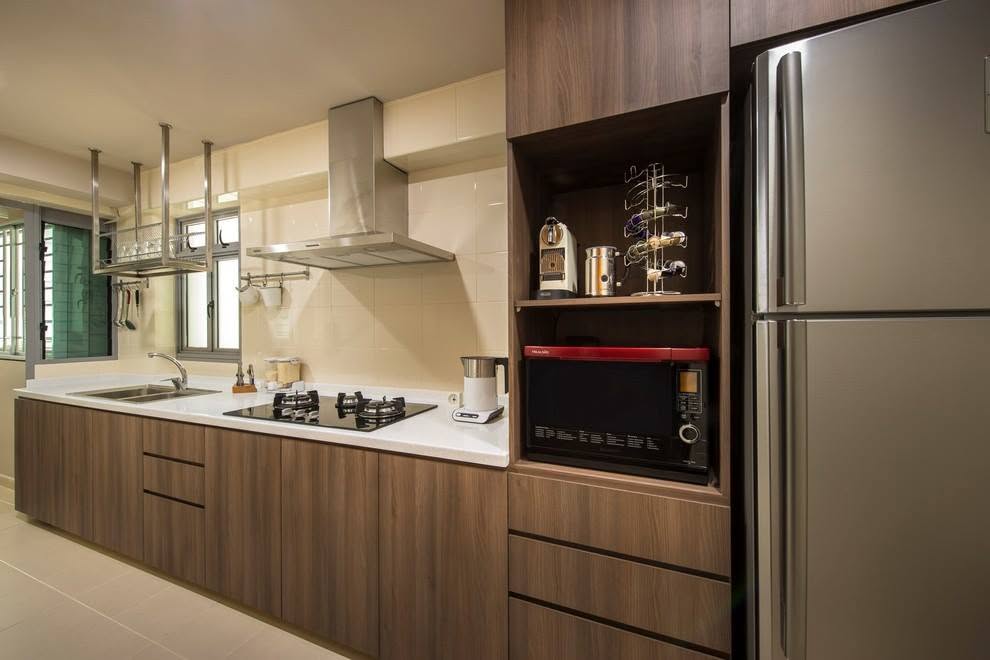

Luxury kitchen design is shifting away from seamless minimalism toward texture, warmth, and custom character. Fluted and reeded cabinetry introduces vertical grooves and ribs that create shadow, movement, and a furniture-like quality without requiring ornate traditional detailing.
This cabinet door approach fits homeowners who want a crafted kitchen that feels personal rather than mass-produced, whether the project is a full kitchen remodeling project or a smaller cabinetry update. Ribbed cabinet fronts pair with natural wood finishes and refined paint colors to deliver a high-end look that balances contemporary lines with organic warmth.
Key Takeaways
Fluted and reeded cabinetry refers to cabinet fronts with repeated vertical texture that creates depth and visual interest. Fluted designs feature concave grooves inspired by architectural columns, while reeded fronts display convex rounded ribs. Both styles introduce linear patterns that catch light and create shadow, transforming flat cabinet surfaces into dimensional features.
These textures turn cabinetry from functional storage into custom millwork. Homeowners choose fluted cabinet design when they want a refined alternative to plain slab doors that still feels clean and modern.
Fluted cabinet fronts display repeated concave grooves cut into the door or drawer face. Reeded cabinetry style showcases convex rounded ribs that project outward from the surface. The visual difference lies in whether the lines recede inward or rise outward, though some designers use the terms interchangeably.
Both create vertical patterns that add texture without busy ornamentation. The choice between fluted and reeded often depends on whether a homeowner prefers the crisp shadow of a groove or the softer roll of a rib.
|
Characteristic |
Fluted Cabinetry |
Reeded Cabinetry |
|
Profile shape |
Concave grooves cut into the door face |
Convex rounded ribs that project outward |
|
Visual effect |
Crisp shadow lines with an architectural feel |
Softer light play with a rolling texture |
|
Common placement |
Appliance panels and pantry walls |
Island fronts and bar or beverage stations |
|
Design impression |
Clean, precise, columnar detail |
Warm, furniture-like character |
Ribbed, tambour, and grooved fronts describe a broader family of textured linear cabinet designs. Tambour typically refers to narrow slats that can curve or roll, often used in appliance garages or door applications. Slab doors with routing create grooves cut directly into a flat face, while applied molding adds ribs or half-round profiles to a substrate.
Tambour and reeded fronts overlap visually but differ in construction method. Each approach offers distinct fabrication requirements, durability characteristics, and design flexibility.
Major design publications have named reeded doors among the cabinet details adding individuality to luxury kitchens. Vertical grain effect and textured fronts appear alongside shiplap, nickel gap panels, and micro-shaker designs as alternatives to default white cabinetry. These details signal custom craftsmanship and intentional material selection rather than generic builder-grade finishes.
The texture reads as high-end because it requires precise fabrication, careful finish application, and thoughtful placement. The kitchen cabinet trends show homeowners prioritizing personalized details over cookie-cutter uniformity.
Fluted and reeded cabinet fronts reflect a broader shift toward personalized kitchens with handcrafted character. Homeowners are moving away from purely seamless, futuristic kitchens toward designs that express individual style through texture and material. This trend aligns with a desire for spaces that feel custom-built rather than assembled from stock components.
Design professionals note that 2025 kitchens emphasize custom layouts and natural materials over anonymous minimalism. Ribbed cabinet fronts satisfy homeowners who want modern function with organic warmth and visual depth.
Fluted and reeded details demonstrate a homeowner's attention to cabinet door selection and finish execution. These profiles require more fabrication precision than flat slab doors, signaling investment in custom cabinetry rather than standard options. The vertical repetition creates a signature look that distinguishes one kitchen from another.
This focus on craft aligns with broader luxury kitchen trends in 2026 toward integrated appliances and personalized layouts. Homeowners view cabinetry as an opportunity to express taste and prioritize long-term quality over short-term convenience.
Natural wood tones and warm stains enhance the textured profile of ribbed cabinet fronts. Light-stained oak, walnut, and warm taupe finishes show off grain patterns and shadow lines more effectively than stark white. These organic materials create a softer, more inviting kitchen atmosphere that feels lived-in rather than sterile.
Design coverage specifically notes a shift toward warm, lightly stained cabinetry instead of default white. Custom kitchen cabinets allow homeowners to select wood species and finish combinations that balance warmth with refinement.
The 2025 kitchen aesthetic prioritizes custom layouts, natural materials, integrated appliances, and colorful palettes over uniform minimalism. Fluted and reeded fronts fit this direction by adding texture that feels both contemporary and organic. These details work with stone countertops, brass hardware, and wood flooring to create layered, sophisticated spaces.
Ribbed profiles help kitchens feel more like curated living spaces than purely functional work zones. This aesthetic shift reflects homeowner demand for kitchens that balance performance with personal expression and sensory appeal.
Fluted and reeded cabinetry creates the strongest visual impact when used selectively on focal cabinet runs. Kitchen islands, tall pantry walls, appliance panels, and beverage stations benefit most from ribbed fronts because they function as architectural features. These placements draw attention without overwhelming the entire kitchen with texture.
Strategic application allows homeowners to enjoy custom millwork character while maintaining practical flat surfaces for everyday use. Selective use also controls cost and simplifies maintenance by limiting textured surfaces to high-visibility, low-contact areas.
Kitchen island fronts benefit from reeded or fluted profiles because the vertical lines create a furniture-like focal point. Tall pantry walls transform large storage planes into architectural features, while appliance panels help integrated refrigerators and dishwashers disappear into custom millwork. Bar and coffee stations gain boutique-hotel detail when fronted with ribbed cabinetry.
Bathroom vanities also translate this trend successfully when finished with moisture-resistant coatings. Cabinet refacing can introduce these details to existing kitchens when boxes and layout remain sound.
Using ribbed fronts on islands or feature walls creates visual hierarchy without saturating the kitchen with texture. This approach allows smooth slab cabinetry to balance the design and provides easier-to-clean surfaces for cooking zones. Selective application also prevents smaller kitchens from feeling darker or more enclosed with too much linear pattern.
Darker wood ribbed fronts can reduce perceived space if overused in compact layouts. Pairing textured island fronts with lighter perimeter cabinetry maintains openness while delivering custom character where it matters most.
Fluted and reeded cabinetry works well in bathroom vanities, built-in bars, and laundry room cabinetry. The vertical texture adds dimension to any millwork application where custom craftsmanship enhances the space. Bathrooms require careful finish selection to handle moisture exposure and prevent warping or peeling.
Many homeowners coordinate ribbed fronts between kitchen islands and adjacent wet bars for design continuity. This consistency creates a cohesive material language throughout connected living spaces without requiring identical cabinetry everywhere.
High-end cabinet finishes transform ribbed profiles from simple texture into custom millwork statements. Light-stained wood shows grain variation and highlights shadow lines, while walnut and darker tones create furniture-like drama. Painted reeded fronts deliver crisp architectural detail that reads as modern rather than rustic.
Finish selection affects both visual appeal and maintenance requirements for textured cabinet fronts. Wood finishes, including lacquer, polyurethane, varnish, oil, and stain, each offer different durability and cleaning characteristics.
Light-stained wood creates warm, natural cabinetry that shows grain patterns and rib detail without feeling heavy. Walnut and darker wood tones deliver dramatic, furniture-like impact suited to islands and feature walls. Painted reeded fronts in cream, taupe, soft black, or navy offer crisp lines and architectural presence.
Natural oak and white oak finishes provide warmth while maintaining airiness that pairs well with stone countertops. These species balance organic texture with contemporary refinement for homeowners who want long-term design appeal.
Matte or satin clear coats create understated finishes that show material texture without excessive reflection. These sheens typically forgive daily wear better than high-gloss lacquer, which highlights every fingerprint and imperfection. High-gloss finishes deliver dramatic reflective surfaces but require very clean execution because grooves and edges reveal fabrication flaws.
Satin finishes balance visual interest with practical maintenance for family kitchens. Grooves collect dust and grease more visibly in high-gloss applications, making sheen selection important for long-term livability.
Homeowners who cook frequently should prioritize durable topcoats that resist moisture, heat, and grease absorption. Families with children may prefer satin or matte finishes that camouflage fingerprints and minor chips better than high-gloss surfaces. Single professionals or empty-nesters might embrace dramatic high-gloss lacquer for statement-making islands or bar fronts.
Finish durability matters more for ribbed fronts because grooves expose more surface area to wear. How to choose the best kitchen cabinets should account for daily habits, cooking frequency, and cleaning preferences.
Custom cabinetry offers the strongest path to exact profile execution, grain alignment, and integrated appliance panel coordination. Full custom fabrication allows precise control over groove depth, rib spacing, wood species selection, and finish application. This approach suits homeowners who want perfect pattern alignment across tall pantry walls or seamless appliance integration.
Cabinet refacing provides a viable alternative when existing cabinet boxes remain structurally sound, and the layout fits current needs. Profile compatibility, hinge clearance, and door weight must be confirmed before refacing with ribbed fronts to ensure proper function.
|
Factor |
Custom Cabinetry |
Cabinet Refacing |
|
Best fit |
Full pattern control and appliance panel integration |
Existing cabinet boxes in sound condition |
|
Cost and timeline |
Higher investment with full fabrication |
Lower cost and a faster turnaround |
|
Design flexibility |
Complete control over groove depth, rib spacing, and wood species |
Limited to new door and drawer front profiles |
|
Ideal project |
New construction or a full kitchen remodel |
A layout that already works and needs a refresh |
Custom fabrication delivers superior results for integrated appliance panels, tall pantry runs, and island designs requiring precise grain direction. In-house custom cabinet shops control every aspect of profile routing, panel thickness, and finish application for consistent quality. This level of control matters when pattern alignment and millwork detailing define the kitchen's visual success.
Homeowners investing in luxury renovations typically choose custom cabinetry to guarantee long-term durability and exact design execution. Custom work also allows formaldehyde-free material selection and precise hardware placement for ribbed profiles.
Cabinet refacing can successfully introduce reeded or fluted fronts when existing cabinet boxes and layouts function well. This approach replaces door and drawer fronts while keeping the structural cabinet frames, reducing cost and construction time. Profile compatibility must be verified because existing hinges and clearances need to support the new door weight and thickness.
Refacing suits straightforward door replacements rather than complex appliance panel integration. Cabinet refacing vs replacement depends on box condition, desired profile complexity, and budget constraints.
Pattern alignment across adjacent doors and tall pantry panels requires careful planning during the design phase. Hardware placement must account for rib or groove positions to avoid awkward visual interruptions or installation conflicts. Appliance panel integration demands precise measurements and profile coordination to create seamless millwork walls.
Design-build teams address these details during consultation to prevent installation problems and visual misalignments. Professional planning ensures ribbed cabinet fronts look intentional rather than poorly executed or mismatched.
Material selection for fluted and reeded cabinetry affects indoor air quality and environmental impact beyond surface aesthetics. Composite wood products, including hardwood plywood, particleboard, and MDF, can emit formaldehyde from adhesives and binders used in manufacturing. Finished cabinet goods containing these materials contribute to cumulative formaldehyde exposure in enclosed spaces.
Health-conscious homeowners prioritize low-emission or formaldehyde-free cabinet construction to reduce indoor air pollutants. Eco-friendly kitchen cabinets combine luxury aesthetics with responsible material sourcing and emission standards.
NAF (no-added-formaldehyde) and ULEF (ultra-low-emitting formaldehyde) designations identify cabinets made with safer adhesives and binders. These standards apply to regulated composite wood categories including hardwood plywood, particleboard, and MDF used in cabinet boxes and door cores. California approved composite wood regulations on April 26, 2007, and EPA published national formaldehyde emissions rules on December 12, 2016.
Compliance with CARB Phase 2 and EPA standards ensures cabinets meet established emission thresholds. Homeowners should verify material certifications during cabinet selection to protect long-term indoor air quality.
Formaldehyde emissions from composite wood products accumulate in enclosed kitchen spaces, particularly in newer homes with tighter construction. Cabinets represent a significant surface area of material exposure because they cover walls, islands, and appliance runs. Long-term formaldehyde exposure presents health concerns that contradict the wellness priorities driving many luxury renovations.
Choosing low-emission materials aligns luxury design with family health and sustainable building practices. Indoor air quality considerations matter as much as finish beauty for homeowners planning long-term kitchen investments.
Bradco Kitchens & Baths has specialized in formaldehyde-free cabinetry since its establishment in 1987. The company's in-house custom cabinet factory allows direct control over material sourcing and emission standards. Over 40+ years of remodeling and cabinetry experience position Bradco Kitchens & Baths to guide Los Angeles homeowners through material selection for healthier kitchens.
This focus on non-toxic cabinetry supports eco-conscious professionals who want luxury design without compromising family health. High-end kitchen cabinets should meet both aesthetic and wellness standards for complete luxury.
Fluted and reeded cabinetry requires more cleaning attention than flat slab doors because grooves create additional surface area. Dust, grease, and fingerprints collect in concave channels and between convex ribs, making profile depth and finish sheen important maintenance factors. Shallow reeded detail in satin finish typically demands less upkeep than deep dramatic grooves in high-gloss applications.
Homeowners should evaluate cleaning commitment before selecting ribbed fronts for high-use cooking zones. How to clean and maintain your kitchen cabinets becomes more detailed when vertical texture replaces smooth surfaces.
Deep grooves collect more dust and grease than shallow profiles, requiring regular detailing with soft brushes or cloths. Painted finishes can highlight dust accumulation and show chips more visibly in recessed channels than on flat surfaces. Sharp or deep grooves become problematic in locations where knees, stools, and shoes contact cabinetry daily.
Moderate profile depth balances visual impact with practical maintenance for most family kitchens. Finish quality and proper sealing reduce how much grime adheres to textured surfaces over time.
Quality preparation and durable topcoats matter significantly for painted ribbed fronts because imperfections show more on textured surfaces. Light-stained wood requires durable clear coats to resist moisture penetration and surface wear in grooves. Matte and satin finishes generally hide minor scratches and dust better than high-gloss lacquer.
Applied molding or reeding durability depends on adhesion quality and whether profiles are solid or hollow. Finish selection should reflect cooking habits, household traffic, and willingness to perform detailed cleaning maintenance.
Placing ribbed fronts on islands and low-contact zones reduces daily wear compared to perimeter cooking cabinetry. Selecting satin or matte finishes in moderate profile depths creates easier maintenance than deep grooves in reflective sheens. Pairing textured feature cabinetry with smooth slab doors in high-use areas balances design interest with practical function.
Shallow reeded detail often provides sufficient visual impact while staying easier to clean than dramatic fluting. Design-build consultation should address placement, profile depth, and finish to ensure long-term satisfaction with textured cabinetry.
Fluted and reeded cabinetry represents more than surface-level trend adoption for luxury kitchens. These ribbed profiles introduce texture, warmth, and custom character that distinguish thoughtful design from generic renovations. When paired with natural materials, durable finishes, and strategic placement, fluted cabinet design and reeded cabinetry style deliver lasting visual appeal without sacrificing practical livability.
Los Angeles homeowners benefit from working with experienced design-build teams who understand how material selection, fabrication quality, and finish execution affect both immediate beauty and long-term maintenance. Why custom kitchen cabinets are worth the investment becomes clear when every detail supports personal style, family health, and daily function. Bradco Kitchens & Baths combines in-house custom fabrication with formaldehyde-free materials to help homeowners achieve luxury kitchens that prioritize craftsmanship and wellness equally.
Ready to add fluted or reeded cabinetry to your kitchen, bathroom, or bar? Bradco Kitchens & Baths has specialized in custom cabinetry from an in-house factory since 1987, giving homeowners direct control over groove depth, wood species, and finish sheen for a result built around daily use, not just a photo. Call (323) 310-4049 or request a free quote to review options for your space and budget, and contact Bradco Kitchens & Baths today!
A. Fluted cabinets feature concave grooves cut into the door or drawer face, while reeded cabinets display convex ribs that project outward. Both create a repeated vertical pattern that catches light and adds shadow, though many designers use the two terms interchangeably. The choice usually comes down to whether a homeowner prefers the crisp recessed line of a groove or the rounded profile of a rib.
A. Fluted and reeded doors typically cost more than flat slab cabinetry because the grooves or ribs require additional fabrication time and precise routing or molding work. The exact difference depends on wood species, profile depth, and whether the cabinetry is fully custom or achieved through refacing existing boxes. Homeowners planning a project should request a detailed quote so material and labor costs are clear before work begins.
A. Cabinet refacing can introduce fluted or reeded fronts when the existing cabinet boxes are structurally sound, and the layout still works for the household. This approach replaces the doors and drawer fronts while keeping the original frames, which lowers cost and shortens the project timeline compared to full replacement. Full custom cabinetry remains the better choice for tall pantry walls, integrated appliance panels, or projects that need exact pattern alignment across multiple doors.
A. Grooved and ribbed surfaces do collect more dust, grease, and fingerprints than flat doors because the channels create additional surface area. A satin or matte finish in a shallow profile is generally easier to maintain than a deep, high-gloss groove, which shows fingerprints and residue more readily. Placing textured fronts on islands or low-contact areas, rather than everyday cooking zones, also keeps upkeep manageable.
A. Yes, this texture translates well to bathroom vanities, built-in bars, and laundry room cabinetry, wherever custom millwork adds visual interest. Bathroom applications call for a moisture-resistant finish to prevent warping or peeling near sinks and tubs. Many homeowners repeat the same profile across a kitchen island and an adjacent bar or vanity to keep a consistent design language throughout connected living spaces.
 Jessica Kienzl
BOOK AN APPOINTMENT