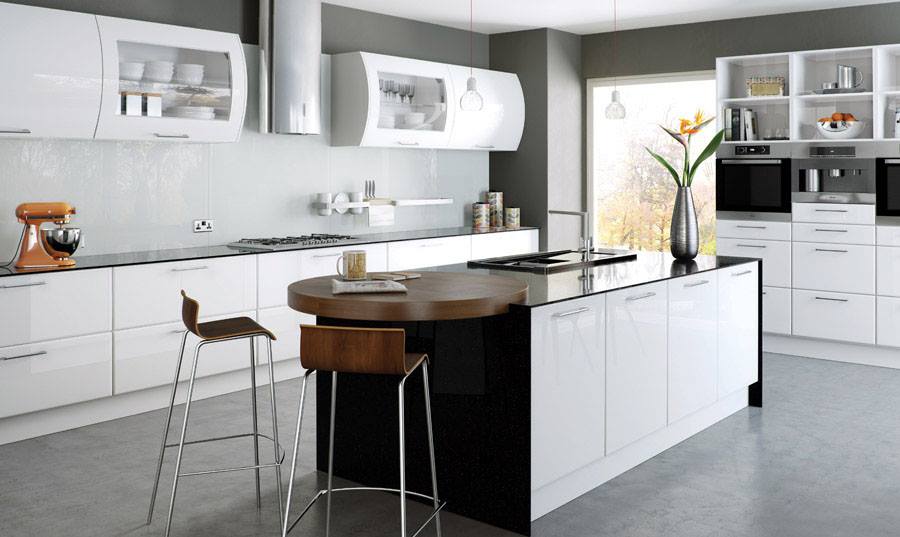
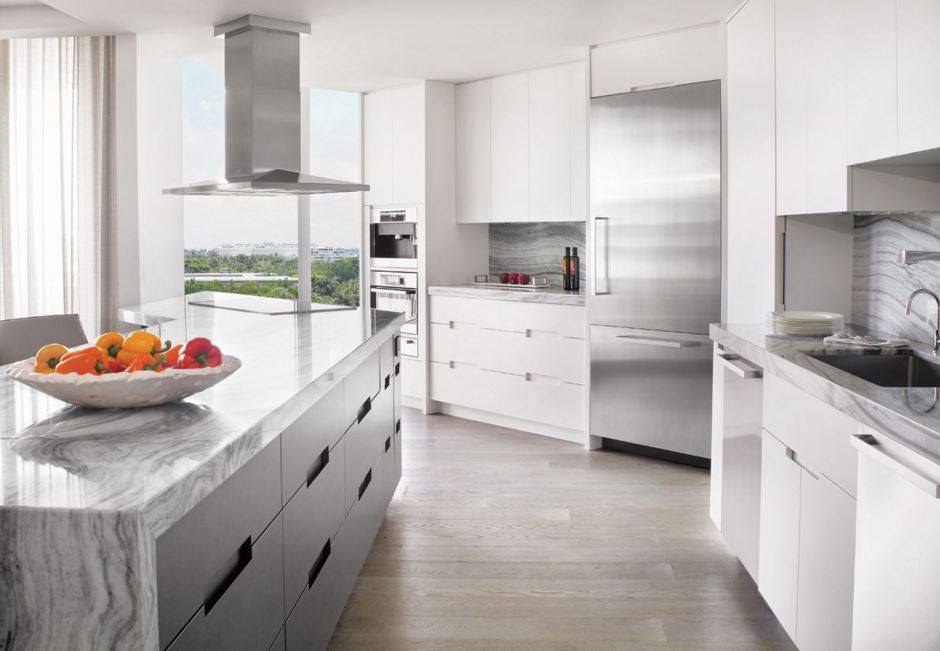
Homeowners who want a kitchen that feels current without losing warmth keep landing on slim shaker cabinet doors. The profile narrows the traditional shaker frame for cleaner lines and keeps the recessed-panel structure that has defined good cabinetry for decades. It bridges transitional elegance and modern restraint, which suits Los Angeles homes built on older bones and updated materials.
The style also settles a real tension: slab fronts can feel cold, and wide-rail classic shakers often read too farmhouse. We cover how slim shaker compares with other profiles, which finishes and hardware suit it, when refacing beats custom kitchen cabinets in Los Angeles, and the material-health questions worth asking before you order.
Key Takeaways
Slim shaker cabinet doors keep the recessed center panel of classic shaker and shrink the frame around it. The silhouette gets sleeker; the shaker structure stays readable. Those proportions sit comfortably inside modern kitchen design without competing with stone surfaces, tile backsplashes, or statement hardware.
You will also see skinny shakers, micro-shaker, narrow-frame shakers, and modern shakers slim. All name the same thing: a trimmer rail and stile.
Door styles differ mainly in the width of the rail and stile framing the center panel, and that one dimension decides how heavy the kitchen reads. The table compares the four profiles Los Angeles homeowners weigh most often.
|
Door Style |
Frame Profile |
Visual Effect |
Suits Homeowners Who Want |
|
Classic shaker |
Wide rail and stile, recessed panel |
Substantial, familiar, time-tested |
Durable traditional-to-transitional cabinetry with resale appeal |
|
Slim shaker |
Narrow rail and stile, recessed panel kept |
Lighter but still architectural |
Modern design with warmth and balance |
|
Slab or flat-panel |
No frame detail at all |
Seamless and minimal |
Handleless, European-style kitchens |
|
Raised panel |
Wide frame, contoured center panel |
Ornate and formal |
Classic or formal styling |
The narrow face detail around the recessed panel is the defining feature. Some profiles use a 7/8-inch face; others drop to 0.60-inch rails and stiles, cutting bulk while keeping recessed-panel character. Those dimensions still throw shadow lines, so the door photographs well without busy ornament, and the slimmer frame lets more finish color or wood grain show.
Door style follows lifestyle more than trend. Resale-minded owners of period homes often stay with classic shaker; owners updating a midcentury or contemporary property lean toward slim shaker. Slab suits minimal, handleless kitchens, and raised panel stays the choice for formal interiors.
Warm minimalism and transitional design lead current remodels because they balance clean lines with inviting materials. Shaker remains the most common door choice, at 61% of homeowners in the 2025 U.S. Houzz Kitchen Trends Study. Slim shaker updates that baseline instead of replacing it, which suits kitchens meant to feel current and comfortable at once.
Transitional style leads at 25% in the same study, with traditional at 14%, modern at 12%, and contemporary at 11%. Preferences are fragmented, and slim shaker bridges them by taking its character from finish and hardware. That matters in Los Angeles, where older architecture meets updated layouts and modern appliances.
Finish direction decides how the door reads once the kitchen is done. The same narrow frame looks airy in warm white, grounded in stained oak, dramatic in charcoal. Two-tone schemes pair a lighter perimeter with a darker island for depth without ornament, as covered in the kitchen cabinet trends that will dominate 2026.
Slim shaker sits between the traditional weight of classic shaker and the stark minimalism of slab. That position suits homeowners who want cabinetry that feels current without turning cold or trendy.
One profile serves several goals. In warm white with brass pulls it reads transitional; in deep charcoal with matte black hardware, modern.
Slim shaker doors work in both full custom cabinetry projects and cabinet refacing when the existing boxes are sound. Custom cabinetry means new boxes built to your exact dimensions and storage needs. Refacing updates doors and drawer fronts and keeps the box structure, a lighter path when the layout already works.
The choice comes down to box condition, layout needs, and scope. Slim shaker suits both routes because the style lives in the face detail, not the box.
|
Consideration |
Cabinet Refacing |
Full Custom Cabinetry |
|
Existing cabinet boxes |
Solid and square |
Damaged or wrongly configured |
|
Kitchen layout |
Works well, stays as it is |
Needs to change |
|
Primary goal |
Style and finish update |
Storage gains, exact fit, design-build |
|
Timeline and budget |
Lighter and faster, no demolition |
Longer, with wider scope |
|
Slim shaker doors |
Custom replacement doors and fronts |
Built to exact proportions |
|
Interior upgrades |
Roll-out shelves, drawers, hardware, LED lighting |
Built in from the start |
Refacing keeps the boxes and replaces everything you see and touch. Bradco Kitchens & Baths builds fully custom replacement doors and fronts in slab, slim shaker, or specialty veneers instead of fitting stock sizes, and can add roll-out shelves, drawers, hardware, and LED lighting in the same project. Damaged or badly configured boxes need an assessment first.
Custom cabinetry means new boxes built to exact specifications. Choose custom kitchen cabinets when boxes are damaged, the layout needs to change, storage is the main goal, or you want a full design-build result. New boxes also handle unusual ceiling heights, out-of-square walls, integrated appliances, and storage that refacing cannot reach.
Bradco Kitchens & Baths offers both, so homeowners can match the approach to the scope. The firm serves Bel-Air, Beverly Wood, Brentwood, Calabasas, Encino, and neighborhoods across the city from its showroom and design center at 8455 Beverly Blvd #305, Los Angeles, CA 90048.
With 40+ years in business, the firm designs in California and manufactures in its company-owned North American facility. Nothing is outsourced, so material, finish, and construction standards stay in-house, and a slim shaker door meets the same standard whether refaced or fully custom.
Finish and hardware decide whether slim shaker cabinet doors read traditional, transitional, or modern. The profile is neutral and takes character from paint color, wood species, and metal finish.
The range runs from warm whites and natural wood to deep paint and two-tone schemes. Brass, nickel, and matte black are the main door hardware options that shift the overall mood.
Finish choice does most of the styling work here. The table pairs finish directions with the design read they produce and the hardware that suits each.
|
Finish Direction |
How It Reads |
Hardware That Suits It |
|
Warm white or off-white |
Bright, timeless, resale-friendly |
Slim brass or polished nickel |
|
Soft greige, taupe, or mushroom |
Modern neutral, warmer than stark white |
Brushed nickel or antique brass |
|
Stained wood, rift-cut white oak, walnut |
Organic texture, midcentury warmth |
Matte black or integrated tab pulls |
|
Deep green, navy, or charcoal |
Bold without ornament |
Matte black or unlacquered brass |
|
Two-tone perimeter and island |
Layered depth with defined zones |
Mixed metals matched to the faucet |
Countertops and backsplashes set the visual field cabinetry sits against. Industry data from the 2025 U.S. Houzz Kitchen Trends Study shows where homeowners are landing.
|
Surface Choice |
Share of Homeowners |
|
White main countertop |
41% |
|
Off-white main countertop |
23% |
|
Black main countertop |
8% |
|
Black island countertop |
18% |
|
Backsplash extending to cabinets or range hood |
67% |
|
Backsplash running full height to the ceiling |
12% |
Light countertops pair naturally with slim shaker in warm white or wood tones, and a darker island countertop adds contrast without heavier cabinet detail. As backsplashes grow, a cleaner door profile lets the stone or tile lead.
Hardware carries the last few percent. Integrated or tab pulls keep the door face uninterrupted; a visible brass or matte black pull turns the same door into a statement. Match faucets, lighting, and appliance handles so the room reads as one decision.
Proportion and scale decide whether the finished kitchen reads custom or generic. Rail and stile width, cabinet height, drawer proportions, and reveal lines all pull together, and design guidance keeps the profile in step with the room's architecture.
Homeowners who understand why custom kitchen cabinets are worth the investment benefit from expert specification of door dimensions, finish quality, and hardware placement.
Cabinet height, door width, and drawer proportions have to align with the profile. Tall cabinets with narrow doors feel stretched; wide doors with very slim rails lose shaker character altogether. Scale also governs how doors relate to range hoods, islands, and appliance panels, so a consistent profile holds the room together while finish or hardware adds the variation.
An NKBA survey of 523 industry professionals across North America shows how designers specify kitchens: 67% of respondents are NKBA members and 61% are designers. A designer turns inspiration photos into specifications that fit real dimensions, so rail width, finish, and hardware placement match how you live and what you can spend.
Slim shaker gives a kitchen enough detail to avoid feeling flat. The recessed panel creates shadow lines; the narrow frame keeps the effect restrained.
More than half of homeowners add or upgrade an accent cabinet during a renovation, displaying decorative items (43%), dishware (34%), and cookbooks (23%). Glass-front and open accent cabinets break up closed runs and work well against slim shaker fronts, as do illuminated display cabinets.
Material health now shapes cabinet selection as much as looks. Composite wood can emit formaldehyde, a volatile organic compound covered by federal standards, so material sits alongside door style and finish in the decision.
Los Angeles homeowners with children, respiratory sensitivities, or environmental values often seek eco-friendly kitchen cabinets as part of their renovation criteria.
EPA TSCA Title VI regulates emissions from composite wood and from finished goods containing hardwood plywood, MDF, and particleboard, setting limits manufacturers have to meet.
UF-free and low-emission materials cut off-gassing in a newly remodeled kitchen. Ask any cabinetry provider for material certifications and emission testing before you order.
Bradco Kitchens & Baths builds custom cabinets from UF-free plywood with low-VOC and zero-VOC water-based paints and finishes. Cabinets are designed in California and manufactured in the company-owned North American facility, which puts sourcing, adhesive selection, and finish application under direct oversight. PaperStone countertops made from recycled paper hold surfaces to the same standard.
With 40+ years in the trade, the firm pairs sustainable building practice with material-health awareness, and can specify how to choose cabinet materials against health, durability, and environmental impact, which sets its service apart in the Los Angeles market.
Material affects indoor air quality, durability, and environmental impact, which makes it as consequential as door style. Slim shaker doors can be built from several species, composites, and engineered materials, each with a different emission profile.
Those choices sit comfortably with timeless design and long-term value. UF-free cabinetry supports a healthier home without costing you any of the refinement slim shaker provides.
Slim shaker cabinet doors hold up over time because they blend familiar structure with current proportions, and the profile carries across Spanish revival, midcentury, and contemporary homes alike.
Median kitchen remodel spend has risen to $60,000 from $55,000, with 90th percentile spend at $180,000. At that level, cabinetry has to stay relevant for years.
Clean lines support integrated appliances, handleless zones, and seamless surfaces, while the narrow frame keeps the room from feeling stark. The profile also takes concealed storage, integrated pantries, and open shelving, and pairs naturally with charging drawers, foot-activated trash pull-outs, and LED-lit interiors.
Los Angeles homes run from Spanish colonial and craftsman to midcentury modern and contemporary, and each wants cabinetry that respects its character. Slim shaker works across all of them.
Warm white with brass pulls complements Spanish architecture; the same profile in natural oak with matte black hardware suits midcentury homes.
Slim shaker keeps the recessed-panel structure that has defined quality cabinetry for decades and narrows the proportions rather than abandoning them. It tracks kitchen door trends into 2026 without depending on them, refining proven design instead of chasing a new one.
It carries enough architectural interest to avoid blandness and little enough ornament to avoid dating, which is what a premium remodel needs.
Bradco Kitchens & Baths brings 40+ years of experience to Los Angeles kitchen remodeling, with design, manufacturing, and installation under one roof. The design center at 8455 Beverly Blvd #305, Los Angeles, CA 90048, lets you see slim shaker profiles, finishes, and hardware in person. Cabinets are designed in California and made in the company-owned North American facility.
Family-owned and operated for 40+ years, the firm works with licensed, insured professionals and backs every project with a 100% customer satisfaction guarantee. The design-build model gives you one point of accountability.
Slim shaker cabinet doors refine proven design, balancing architectural interest with clean proportions. Whether you reface or build fully custom, guidance on profile, finish, and hardware keeps the result aligned with the house.
Slim shaker works when the proportions are right for the room. Our designers measure your kitchen, test rail and stile widths against your ceiling height and drawer stacks, and set finish and hardware samples side by side at the Beverly Blvd design center. The door you approve is the door that gets built.
Call (323) 310-4049 to talk through kitchen cabinet refacing and full custom options with a designer, or request a quote online. For a free consultation on slim shaker cabinet doors, contact Bradco Kitchens & Baths today!
A. Both use a recessed center panel, so the difference is the width of the rail and stile framing it. Classic shaker uses a wider frame and carries more visual weight. Slim shaker narrows it, with common profiles from about 0.60 inch to 7/8 inch of face detail. The door keeps its shadow lines but reads lighter across a full run.
A. Price tracks material, finish, and construction method far more than frame width. A painted slim shaker door and a painted classic shaker door in the same species usually land in the same range. Costs rise with specialty veneers such as rift-cut white oak or walnut, multi-step finishes, and non-standard sizes. Ask a designer to price both side by side.
A. Yes. Refacing replaces doors and drawer fronts while keeping the boxes, and slim shaker is a common replacement profile because the style lives in the door face. Bradco Kitchens & Baths builds fully custom replacement doors instead of fitting stock sizes, so proportions match the room. Roll-out shelves, drawers, hardware, and LED lighting can go in at the same time.
A. Warm white and off-white stay the most flexible, especially in homes with strong natural light. Soft greige and taupe add warmth without going dark. Rift-cut white oak and walnut veneers suit midcentury and contemporary properties, and deep green, navy, or charcoal give a bold result without ornament.
A. Timelines depend on scope. Refacing moves faster than a full remodel because the boxes stay put and nothing gets demolished. Full custom runs longer, since boxes are built to your measurements and lead times shift with finish complexity and appliance integration. A designer can give you a schedule once the kitchen is measured.
 Jessica Kienzl
BOOK AN APPOINTMENT