
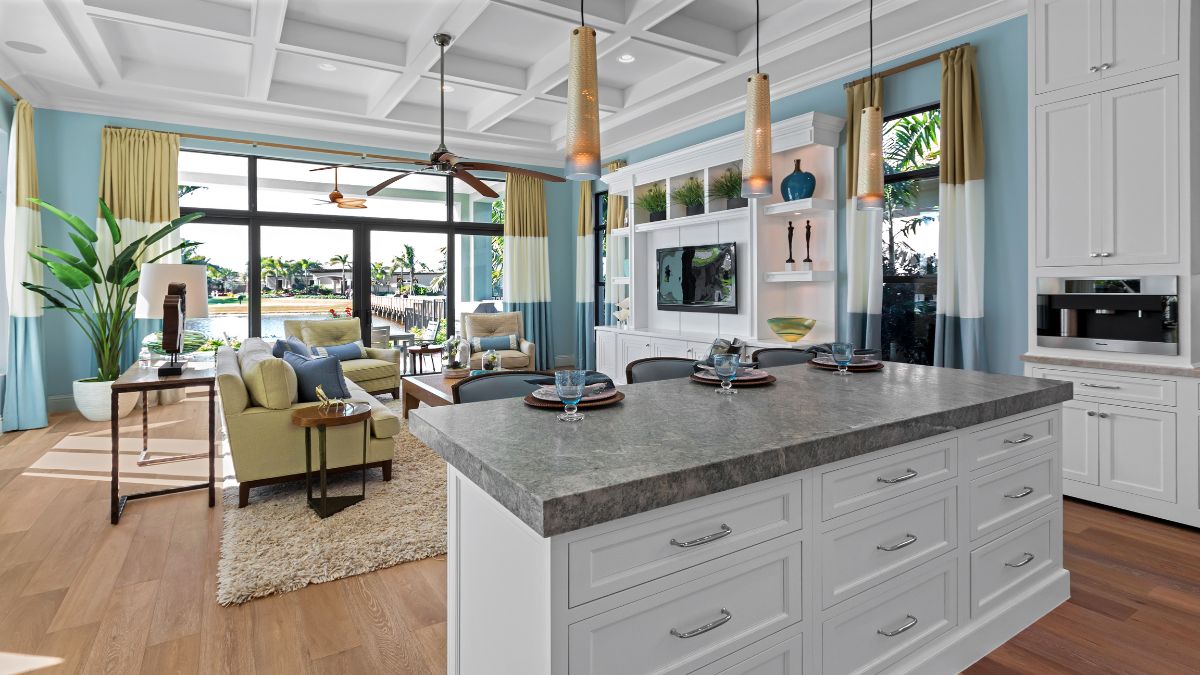
Los Angeles homeowners increasingly seek kitchens that feel beautiful, healthy, and environmentally responsible. Eco-friendly kitchen remodeling now includes low-VOC finishes, safer cabinet materials, energy-efficient appliances, water-saving fixtures, and designs that reduce unnecessary waste. For many families, the first step is choosing non-toxic cabinetry with low-emission boxes and finishes.
We cover the practical trend categories: which materials and upgrades matter, how to avoid vague green claims, what to ask a remodeler, and how Bradco Kitchens & Baths draws on 40+ years of custom kitchen work to support greener planning. Each trend helps create a kitchen that performs well while protecting indoor air quality and conserving resources.
Key Takeaways
An eco-friendly kitchen remodel uses materials and fixtures that reduce emissions, conserve resources, and support long-term durability. Green remodeling prioritizes indoor air quality, efficient water and energy use, waste reduction, and responsible material sourcing.
This approach benefits homeowners through healthier indoor environments and lower ongoing operating costs. It also aligns with California's environmental standards and Los Angeles design preferences for high-performance, thoughtfully sourced kitchens.
Low-VOC finishes use water-based formulations that release far fewer emissions than traditional solvent-based finishes. PureBond plywood avoids added formaldehyde by using a soy-based adhesive instead of urea-formaldehyde glue.
NAF means no added formaldehyde; ULEF means ultra-low-emitting formaldehyde in composite wood products. Eco-friendly cabinet materials include formaldehyde-free plywood, low-VOC finishes, bamboo, reclaimed wood, recycled-content countertops, and FSC-certified wood. The table below compares common options.
| Material | Eco Benefit | Where It Works |
| Formaldehyde-free plywood (PureBond) | No added formaldehyde in the cabinet box | Cabinet boxes and shelves |
| Water-based low-VOC finishes | Lower emissions and less lingering odor | Cabinet doors, trim, and walls |
| FSC-certified wood and veneers | Third-party verified responsible forestry | Doors, drawer fronts, and islands |
| Bamboo | Fast-renewing plant material | Doors, open shelving, and accents |
| PaperStone or recycled glass | Recycled content kept out of landfills | Countertops and backsplashes |
Concentrations of many VOCs are consistently higher indoors than outdoors, up to ten times higher in some studies. People spend about 90 percent of their time indoors, making indoor air quality a significant health consideration.
EPA's TEAM Study found levels of about a dozen common organic pollutants to be 2 to 5 times higher inside homes than outside. VOCs are emitted as gases from paints, lacquers, paint strippers, cleaning supplies, pesticides, building materials, furnishings, and adhesives.
Green remodeling is a renovation approach that uses eco-certified materials and energy-efficient fixtures. Energy-efficient kitchen upgrades include ENERGY STAR appliances, LED and under-cabinet lighting, and induction cooking options.
Water-saving kitchen fixtures include low-flow faucets, faucet aerators, and ENERGY STAR dishwashers. Families can save more than $380 annually by retrofitting with WaterSense-labeled fixtures and ENERGY STAR-certified appliances.
Low-VOC and formaldehyde-conscious materials address growing concerns about indoor air quality and chemical exposure in frequently used spaces. Open-concept Los Angeles homes amplify the importance of low-emission cabinetry and finishes because kitchens connect directly to living areas.
These materials help homeowners avoid strong chemical odors after remodel completion and reduce long-term exposure risks. California's regulatory environment and health-conscious buyer preferences make non-toxic materials a practical remodeling priority.
VOC health effects may include eye, nose, and throat irritation, headaches, loss of coordination, nausea, and damage to the liver, kidneys, and central nervous system. High VOC concentrations can linger in the air long after the activity ends.
Indoor pollutant levels may be greater than outdoor levels, posing health risks especially to the young, elderly, and chronically ill. Low-VOC cabinet finishes use water-based formulations that cut harmful emissions compared to traditional oil-based products.
CARB Phase 2 and TSCA Title VI are regulations that require formaldehyde emission limits for composite wood products. CARB's composite wood program focuses on hardwood plywood, particleboard, and medium-density fiberboard used in cabinet construction.
Composite wood products that can emit formaldehyde include cabinets, flooring, desks, toys, photo frames, and countertops. This guide to avoiding formaldehyde in cabinetry explains how CARB-compliant materials, NAF or ULEF options, and PureBond plywood lower exposure.
Ask which stains, paints, adhesives, and sealers are low-VOC and whether product data sheets are available. Ask about CARB-compliant materials, NAF or ULEF options, and PureBond or equivalent availability for cabinet boxes.
Ask whether the contractor can document product specifications and certifications before installation begins. Eco-friendly materials and finishes should be verified through manufacturer documentation rather than verbal assurances alone.
Sustainable and durable surfaces combine responsible sourcing, recycled content, and long-lasting performance that reduces replacement frequency. Los Angeles homeowners value materials that deliver both environmental benefits and high-end aesthetics suitable for custom kitchen design.
These surfaces include recycled-content countertops, responsibly sourced wood, and finishes built for maintenance rather than frequent replacement. Durable choices reduce lifecycle waste while meeting the design standards Los Angeles homeowners expect.
Durable surface options include recycled-content countertops, responsibly sourced wood, and long-lasting finishes. Recycled glass countertops combine post-consumer glass with cement or resin binders to create visually distinctive, durable work surfaces.
Reclaimed wood works for islands, open shelving, or accent surfaces when properly sealed and maintained. PaperStone, made from recycled paper, is one of the countertops and surfaces Bradco Kitchens & Baths offers for homeowners who want recycled content with a clean, modern look.
FSC labels indicate forest products tied to FSC standards for responsible forestry management and chain-of-custody verification. Ask whether wood or veneers are FSC-certified or responsibly sourced through documented supplier programs.
FSC-certified cabinets provide third-party verification that wood comes from forests managed for ecological, social, and economic sustainability. Sustainable wood choices support forest health while delivering the natural beauty and durability homeowners expect.
Ask about recycled-content, durable, repairable, or long-life materials suitable for Los Angeles homes. Materials that resist staining, scratching, and moisture damage reduce the need for premature replacement and maintain visual appeal.
Quartz, porcelain, and properly sealed natural stone offer decades of performance when maintained correctly. Choosing materials with proven longevity reduces environmental impact while protecting the homeowner's investment in custom kitchen design.
Refacing and waste-conscious remodeling reduce the volume of materials sent to landfills while preserving functional cabinetry. Construction and demolition debris generation in the United States was about 600 million tons in 2018, more than twice the amount of generated municipal solid waste.
Demolition represents more than 90 percent of total C&D debris generation, while construction represents less than 10 percent. Options like kitchen cabinet refacing in Los Angeles help homeowners avoid unnecessary demolition while still achieving real aesthetic and functional improvements.
Cabinet refacing is the process of updating cabinet exteriors with new doors and veneers while retaining the structure. Bradco Kitchens & Baths goes beyond stock doors with fully custom door styles and can add pull-outs, drawers, and LED lighting during refacing.
Cabinet refacing versus replacement depends on the condition of existing boxes, desired layout changes, and long-term functional goals. The comparison below shows how the two paths differ.
| Factor | Cabinet Refacing | Full Replacement |
| Existing cabinet boxes | Kept and reused | Removed and replaced |
| Demolition waste | Low | High |
| Layout changes | Limited to doors, interiors, and hardware | Full layout freedom |
| Kitchen downtime | Shorter | Longer |
| Good fit when | Boxes are sound and the layout works | Boxes are damaged or the layout must change |
Waste-conscious remodeling practices include salvage, recycling, donation of functional materials, and careful ordering to minimize packaging waste. EPA's 2016 Recycling Economic Information Report showed that in 2012 the recycling of C&D materials created 175,000 jobs.
Functional cabinets, appliances, and fixtures can be donated to reuse organizations rather than sent to landfills. Planning material orders carefully and choosing suppliers with take-back programs further reduces waste during the remodeling process.
Just over 455 million tons of C&D debris were directed to next use and just under 145 million tons were sent to landfills in 2018. Waste reduction influences project planning by encouraging selective demolition, material reuse, and careful specification of new materials.
Contractors can create a waste-management plan that identifies recyclable materials, donation opportunities, and disposal methods before work begins. This planning reduces landfill fees, supports local reuse programs, and demonstrates commitment to sustainable remodeling practices.
Energy, water, light, and ventilation upgrades work together to create efficient, comfortable, and healthy kitchen environments. These systems affect daily operating costs, indoor air quality, and overall kitchen performance throughout the life of the space.
Integrated planning ensures that appliances, fixtures, lighting, and ventilation support each other rather than working at cross purposes. Green kitchen design considers how layout, natural light, mechanical systems, and material choices interact to create a high-performing space.
Energy-efficient kitchen appliances carry ENERGY STAR certification and meet strict criteria for reduced energy use. ENERGY STAR refrigerators and dishwashers rely on improved insulation, efficient motors, and precise controls. This guide to energy-efficient kitchen appliances covers model choices in more detail.
LED lighting uses far less energy than incandescent or halogen options while providing better task illumination. Induction cooktops heat cookware directly rather than the cooktop surface, improving efficiency and reducing ambient heat, and careful appliance integration lets efficient models sit flush with custom cabinetry.
WaterSense-labeled products are backed by independent certification and meet EPA criteria for water efficiency and performance. Household leaks can waste nearly 10,000 gallons of water every year, and many homes have leaks that waste 90 gallons or more per day.
The average family spends more than $1,000 per year in water costs, but can use at least 20 percent less water by installing water-efficient fixtures and appliances. Low-flow kitchen faucets and ENERGY STAR dishwashers reduce consumption without sacrificing performance, and California already limits new kitchen faucets to 1.8 gallons per minute.
Ask how layout, windows, range hoods, and lighting work together to create a well-ventilated, naturally lit kitchen. Strategic window placement and open sightlines maximize daylight penetration and reduce reliance on artificial lighting during daytime hours.
Properly sized range hoods with adequate CFM ratings remove cooking moisture, odors, and combustion byproducts before they spread through the home. This kitchen ventilation guide explains how to coordinate hood size, makeup air, and daylighting for a more comfortable kitchen.
Los Angeles homeowners should ask specific questions about material certifications, product documentation, and performance trade-offs. Sustainable kitchen remodeling requires verifying green claims through manufacturer data rather than relying on generic marketing language.
A clear question framework helps homeowners evaluate contractors and material suppliers objectively. Understanding which certifications matter, what trade-offs exist, and how to verify claims protects both investment and environmental goals.
CARB Phase 2 and TSCA Title VI certifications apply to composite wood products and verify formaldehyde emission limits. NAF and ULEF labels indicate no added or ultra-low-emitting formaldehyde in plywood, particleboard, and medium-density fiberboard.
FSC certification verifies that wood products come from responsibly managed forests with documented chain-of-custody tracking. ENERGY STAR and WaterSense labels confirm that appliances and fixtures meet EPA efficiency and performance criteria. The table below summarizes each label.
| Label | What It Verifies | Applies To |
| CARB Phase 2 / TSCA Title VI | Formaldehyde emission limits | Plywood, particleboard, and MDF |
| NAF / ULEF | No added or ultra-low-emitting formaldehyde | Composite wood cabinet boxes |
| FSC | Responsible forestry and chain of custody | Wood and veneers |
| GREENGUARD Gold | Low chemical emissions into indoor air | Finishes, adhesives, and surfaces |
| ENERGY STAR | EPA energy efficiency criteria | Appliances and lighting |
| WaterSense | EPA water efficiency and performance criteria | Bathroom faucets, showerheads, and toilets |
Many homeowners weigh environmental impact when choosing cabinets, but they must also consider durability, aesthetics, and budget. Some sustainable materials carry higher upfront costs but deliver longer lifespans and lower maintenance requirements.
Comparing lifecycle costs rather than purchase prices alone provides a clearer picture of long-term value. Ask contractors to explain how material choices affect performance, maintenance needs, and replacement timelines in addition to environmental impact.
Ask about ENERGY STAR appliances, LED lighting, WaterSense fixtures, and ventilation planning with documented specifications. Request product data sheets, certifications, and manufacturer documentation for cabinet materials, finishes, adhesives, and sealants.
Verify that composite wood products meet CARB standards and that finishes carry low-VOC or water-based formulations. Ask whether the contractor can provide third-party certifications rather than relying solely on verbal assurances or marketing materials.
Bradco Kitchens & Baths brings 40+ years of experience to eco-friendly remodeling through custom cabinetry options, documented material specifications, and full-service design-build capabilities. Its cabinetry is designed in California and manufactured in the company-owned North American facility, which gives direct control over material sourcing, construction methods, and finish application.
Homeowners can discuss low-VOC finishes, formaldehyde-free cabinet boxes, responsible wood sourcing, and energy-efficient appliance integration during the design process. Bradco Kitchens & Baths has been featured on the PureBond fabricator network, and its experience with kitchen remodeling in Los Angeles helps turn environmental priorities into practical, high-performing kitchen designs.
Eco-friendly kitchen remodeling in Los Angeles has moved from niche preference to practical standard for health-conscious and environmentally aware homeowners. The trends covered here, including low-VOC finishes, formaldehyde-conscious cabinetry, responsible wood sourcing, durable surfaces, waste reduction, and efficient systems, work together to create kitchens that perform better and last longer.
These approaches reduce indoor air pollutants, conserve water and energy, cut construction waste, and support long-term durability without sacrificing aesthetics or function. Bradco Kitchens & Baths combines custom design with documented material specifications to help Los Angeles homeowners reach their environmental goals in a kitchen they love.
For 40+ years, Bradco Kitchens & Baths has helped Los Angeles homeowners plan healthier kitchens, with formaldehyde-free cabinet boxes, low-VOC finishes, custom refacing, and efficient appliance integration available in every design. Visit our design center at 8455 Beverly Blvd to see materials in person, or call (323) 310-4049 to talk through your project with our team.
Ready to start? Request a free quote and contact Bradco Kitchens & Baths today!
A. Cost depends on kitchen size, cabinet construction, countertop choice, and whether you reface or replace. Formaldehyde-free plywood and low-VOC finishes often add a modest premium over standard materials, while refacing usually costs less than full replacement because the boxes stay in place. Efficient appliances may cost more upfront but lower utility bills for years. A design consultation gives you a line-item estimate based on your actual layout.
A. Ask for the CARB Phase 2 or TSCA Title VI compliance label on the composite wood, and ask whether the boxes are NAF, ULEF, or PureBond plywood. Request product data sheets that list the VOC content of every stain, paint, and sealer. A cabinet with a solid wood door can still have a particleboard box that emits formaldehyde, so ask about the box material specifically.
A. Traditional solvent-based finishes can off-gas for weeks or even months after installation. Water-based low-VOC finishes release most of their emissions within the first few days. Cabinets finished in a factory arrive with much of the curing already done, which cuts the odor inside your home. Running the range hood and opening windows during the first week also helps.
A. Refacing is usually the greener choice when the existing boxes are structurally sound, because it keeps them out of the landfill and uses fewer new materials. New doors and drawer fronts can still use low-VOC finishes and FSC-certified veneers. Replacement makes more sense when boxes have water damage or the layout needs to change. In that case, donating the old cabinets keeps them in use.
A. Permitted remodels in California must meet the parts of Title 24 that apply to the work, including the CALGreen code and the state energy code. For kitchens, that often means high-efficacy lighting and properly vented range hoods. California also sets water flow limits for new kitchen faucets. An experienced remodeler handles these requirements during design and permitting so the project passes inspection.
BOOK AN APPOINTMENT