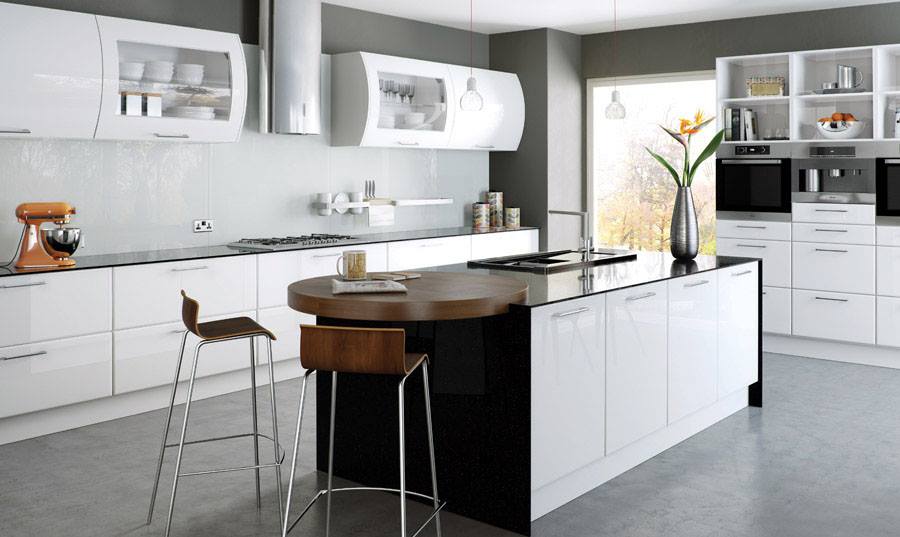

Adjustable shelving with integrated LED lighting makes cabinet interiors easier to see, adjust, and use every day. Storage in modern kitchen design has moved beyond adding more cabinets, and this feature addresses the two things that shape how homeowners use stored items: flexibility and visibility.
We cover how adjustable shelving and integrated LED lighting work together, which cabinets gain the most, the design choices that matter, and what to discuss before cabinetry is built. After 40+ years of designing custom cabinetry for Los Angeles homes, Bradco Kitchens & Baths has found that planning shelf spacing, light placement, wiring, and switching during the design phase is what makes this feature work day to day.
Key Takeaways
Integrated lighting and adjustable shelving create cabinet interiors that adapt to household storage patterns and stay easy to see. The shelf layout determines what fits; the lighting determines how easily homeowners can find and use it.
Together, these features cut clutter and improve the kitchen storage LA homeowners rely on. Planning both during cabinet design lets wiring paths, shelf positions, and door clearances line up.
Adjustable shelving uses shelves set on pin holes, metal standards, or concealed internal hardware, so shelf height can change as storage needs change. This helps homeowners fit mixing bowls, small appliances, pantry bins, glassware, or serving dishes without wasted vertical space.
Unlike fixed shelves, adjustable systems let cabinet interiors change as household needs shift. The hardware offers multiple height positions while keeping the support needed for daily use.
Integrated LED lighting is lighting built into the cabinet box or shelf rather than added later as a loose fixture. According to ENERGY STAR, LEDs are highly energy efficient, last longer than incandescent bulbs, and come in a range of color appearances and brightness levels.
The built-in approach runs cool and outlasts stick-on aftermarket lights, and it can run from switches, dimmers, smart controls, or door sensors.
Adjustable shelving creates usable storage zones, and integrated LED lighting makes those zones visible. A tall pantry with adjustable shelves can hold cereal boxes, jars, and appliances while interior lights help homeowners spot items at the back of each shelf.
A display cabinet can pair adjustable glass or wood shelves with low-profile LEDs to highlight items without overpowering the room. Planning both together keeps shelves from blocking the light.
Deep, tall, display, pantry, and frequently used cabinets gain the clearest benefit from this feature.
The table below shows where the feature pays off and why.
| Cabinet zone | Common problem | What adjustable shelving adds | What integrated LED lighting adds |
|---|---|---|---|
| Tall pantry | Mixed item heights, dark back shelves | Shelf gaps sized to jars, cans, and appliances | Light across the full depth for faster meal prep |
| Upper cabinets | Deep boxes above the counter | Heights set for plates, glasses, and mugs | Clear view without pulling items forward |
| Display and glass-front | Items look flat after dark | Room for tall vases or stacked dishware | Soft accent light on glassware and finishes |
| Base and corner | Low, hard-to-reach interiors | Works with pull-out and swing-out shelves | Less crouching and blind reaching |
| Deep storage | Items get lost at the back | Shelves set to match stored items | Even light from front to back |
Jars, cans, small appliances, and stacked containers vary in height, so fixed shelves in a tall pantry cabinet often leave wasted space above short items. Homeowners end up removing the front row to reach the back.
Integrated lighting reaches the back of deep pantry zones that ceiling lights miss, which speeds up meal prep.
Upper cabinets gain visibility above counters, especially deep cabinets or those in low-light areas near exterior walls. Interior lighting removes the dark-box problem that makes dishes and glasses hard to identify.
Display cabinets and open shelving benefit when homeowners want to show glassware, decorative pieces, or the cabinetry itself. Adjustable glass or wood shelves with low-profile LEDs create display zones without harsh glare.
Base and corner cabinets often have dark interiors that force homeowners to crouch or reach blindly. Lighting helps, and pull-outs or swing-out shelves may also be needed for full access.
Corner options such as pull-out shelves, swing-out shelves, blind-corner solutions, and vertical pull-outs work better with interior lighting. Adjustable shelving lets homeowners set these hard-to-reach spaces around the items they actually store.
This feature solves storage frustrations that build up over time: items lost at the back, wasted vertical space, cluttered counters, and hard-to-reach supplies.
Its value comes from daily use, not decoration alone.
Dark cabinet interiors force homeowners to pull items forward or empty shelves to find supplies. Integrated LED lighting gives steady light inside each compartment, so stored items stay in view.
Adjustable shelving creates storage zones sized for real items, which keeps counters clear and meal prep moving.
Better visibility and flexible shelf heights reduce overreaching and unloading, which matters for homeowners with mobility concerns. Aging-in-place kitchen design focuses on features that make daily tasks safer and less tiring.
Lighting inside upper, pantry, and base cabinets helps homeowners find items with less bending and reaching. Adjustable shelves can also move lower as family members age, and our accessible kitchen design guide covers related planning choices.
Fixed shelves often leave vertical gaps because items on one shelf do not reach the shelf above. Adjustable systems close those gaps by matching shelf height to what is stored.
Lighting keeps that extra capacity usable, giving kitchen storage LA homeowners can adjust as household needs change.
Shelf hardware, electrical access, and door clearances must line up before fabrication, and these choices affect daily use and service access.
Share storage habits, lighting preferences, and access concerns at the design appointment.
Shelf spacing depends on what will be stored. Pantry goods, small appliances, dishes, and glassware each need different vertical clearance, and a list of typical items helps designers recommend spacing and hardware.
Shelf depth and weight capacity must carry the intended load without sagging. Custom cabinetry lets these specifications be set during the kitchen remodeling process instead of forcing homeowners into stock dimensions.
Color temperature affects how cabinet interiors and stored items look. Matching it to the kitchen's ambient lighting keeps interior light from looking out of place.
Brightness, diffusion, and glare control decide whether the lighting improves visibility or creates hot spots and shadows. Dimming lets homeowners adjust intensity by time of day or task. Use the table below as a starting point.
| Lighting factor | Common options | What to consider |
|---|---|---|
| Color temperature | Warm white (2700K to 3000K), neutral white (3500K to 4000K), cool white (5000K) | Match the room's ambient and under-cabinet lighting |
| Brightness | Lower output for display, higher output for pantry and task zones | Deep and tall cabinets need more light than shallow ones |
| Diffusion | Frosted lenses or recessed channels | Hides individual LED dots and cuts glare on glass shelves |
| Controls | Door sensors, switches, dimmers, smart controls | Sensors suit pantries; dimmers suit display cabinets |
| Placement | Front edge, side stiles, or shelf-integrated strips | Light should reach the full shelf depth, not just the front |
Shelf locations, wiring paths, switch or sensor placement, and door or drawer movement must be coordinated before installation. Poor planning leads to visible wires, blocked drivers, or light that misses some shelves.
Low-voltage drivers, outlets, and service points should stay reachable without taking the cabinet apart.
Adjustable shelving with integrated LED lighting works most effectively when planned during new cabinet design or a full kitchen remodel. Custom cabinetry lets wiring, shelf layout, and light placement be set before fabrication.
Retrofits are possible in some cases, but they rarely match the finished look of systems built into custom kitchen cabinets in Los Angeles from the start. Planning early lets every element work together.
Bring pictures, plans, sketches, measurements, and ideas to the first appointment so designers understand scope and priorities. Notes on what you store and which cabinets need lighting help match specifications to daily use.
Confirm shelf hardware, electrical access, color temperature, dimming, and service needs during design. Bradco Kitchens & Baths designs its cabinetry in California and manufactures it in a company-owned North American facility, so design, manufacturing, and installation stay coordinated under one team.
Storage add-ons such as pull-out shelves, wine racks, vertical dividers, and pull-out bins should be planned alongside shelving and lighting. Space optimization storage solutions work well when every element is specified together.
Cabinet interior lighting should also coordinate with under-cabinet, ambient, and task lighting to create layered light. Our guide on how lighting enhances your kitchen cabinet design explains how these layers work together.
Adding lighting is easiest during custom cabinet design or remodeling, when wiring and shelf layout can be coordinated. Integrated lighting looks planned and built-in, while battery stick-on lights often give uneven light and a temporary look.
The comparison below shows the main differences.
| Factor | Retrofit lighting | Integrated custom installation |
|---|---|---|
| Wiring | Often visible or battery-powered | Concealed during fabrication |
| Light coverage | Fixed spots, uneven across shelves | Planned for the full shelf depth |
| Shelf changes | Moving a shelf can block the light | Light placed around shelf positions |
| Service access | Drivers and batteries are hard to reach | Access points set during design |
| Appearance | Added-on look | Built-in, finished look |
Most homeowner concerns come from poor planning or product choice, not limits of the feature itself.
Each one can be addressed during design.
The idea that cabinet lighting is only cosmetic misses its value in deep, tall, or dark cabinets. Task lighting inside cabinets cuts down on fumbling, overreaching, and unloading shelves to find items.
Our article on kitchen storage psychology and better habits explores how visibility and organization shape daily kitchen behavior. Functional lighting supports better storage habits, and the decorative effect is a bonus.
A color temperature that clashes with the room's lighting makes cabinet interiors look too warm or too cool. Review the kitchen's full lighting plan so the cabinet lighting fits in.
Glare, visible light strips, and mismatched color can be solved with diffusers, careful placement, and a dimmer switch. Lighting only the front edge while the back stays dark defeats the purpose, so placement should cover the full shelf depth.
Wiring and maintenance concerns shrink when drivers, switches, and service points are planned for easy access from the start. LEDs last longer than traditional bulbs, which reduces replacement frequency.
Cost depends on how many cabinets receive lighting, the control type, and electrical access, so focusing the upgrade on high-use zones keeps budgets in check. Custom cabinetry lets wire concealment and service access be set before installation instead of improvised later.
Prioritizing zones by storage problems and daily use puts the budget where it does the most work.
Look for cabinets that are hard to see into, waste vertical space, or take extra effort to reach. Those pain points show where the feature adds real value, and our overview of smart storage solutions for kitchen cabinets covers other upgrades worth pairing with it.
Pantry, display, upper, corner, and deep zones deserve the first look. Tall cabinets gain the most from adjustable shelving because stored items vary widely in height.
Display cabinets gain visual appeal from lighting, and upper cabinets become easier to use.
Frequency of use, cabinet depth, ambient light, and the variety of stored items all shape priority. Cabinets opened several times a day rank above cabinets used for seasonal items.
Deep cabinets in low-light areas gain more from lighting than shallow cabinets near windows. Adjustable shelving matters most where stored items vary in size.
Skip lighting in cabinets that do not need it and focus on zones where visibility and flexible storage solve daily problems.
Visible shelf-pin holes and lighting channels can stay out of sight through careful design and quality hardware. Bradco Kitchens & Baths builds adjustable shelving without visible shelf-pin holes, so the interior looks clean from day one.
Shelf hardware, electrical access, color temperature, dimming, and maintenance needs vary by cabinet and product, so review them at the design appointment.
Confirm which cabinets receive adjustable shelves, which include integrated LEDs, and where wiring, drivers, and switches can be accessed. This level of detail prevents surprises during installation.
Bradco Kitchens & Baths coordinates custom cabinet design, manufacturing, and installation so interior features such as adjustable shelving with integrated LED lighting are planned and built around household needs. With 40+ years of experience and a design center on Beverly Blvd in Los Angeles, our team helps homeowners set storage and lighting details before cabinetry is manufactured.
Ready for cabinets that are easier to see into and simple to adjust? Bradco Kitchens & Baths designs custom cabinetry with adjustable shelving, integrated LED lighting, and smart storage for Los Angeles homes, backed by 40+ years of design/build experience.
Call (323) 310-4049 or request a free quote to book a design consultation at our Los Angeles design center. Bring your measurements, photos, and storage wish list, and our designers will map out shelf spacing, lighting, and controls for each cabinet. To get started, contact Bradco Kitchens & Baths today!
A. Yes, but the results depend on cabinet construction and electrical access. Plug-in or battery LED strips can go into existing cabinets, though they often leave visible wires or uneven light. Hardwired integrated lighting works most reliably when cabinets are built or refaced with wiring paths in place. During cabinet refacing, Bradco Kitchens & Baths can also modify interiors, including adding LED lighting and new shelving.
A. Capacity depends on shelf material, thickness, width, and support hardware. A thick plywood shelf on quality metal supports holds far more than a thin particleboard shelf spanning a wide cabinet. Wide shelves that carry heavy items such as stand mixers or stacked plates may need thicker material or a center support. Share your heaviest stored items during design so the shelves are specified to carry them without sagging.
A. Most kitchens use warm to neutral white inside cabinets, roughly 2700K to 4000K. Warm white suits display cabinets and wood interiors, while neutral white helps in pantries where you need to read labels. Cabinet lighting should match the room's under-cabinet and ceiling lights so the kitchen does not look patchy. A high color rendering index (CRI) also helps food and dishware show their true colors.
A. They can. Door-activated sensors switch the lights on when a door or drawer opens and off when it closes, which suits pantries and deep base cabinets. Motion sensors, touch switches, dimmers, and smart controls are other options. The right control depends on how often the cabinet is used and whether it serves storage or display.
A. No. According to ENERGY STAR, LEDs use far less energy than incandescent bulbs and last much longer. Most upkeep involves the low-voltage driver, which should sit where it can be reached without removing shelves or panels. Planning that access during design keeps future service simple and low cost.
 Jessica Kienzl
BOOK AN APPOINTMENT