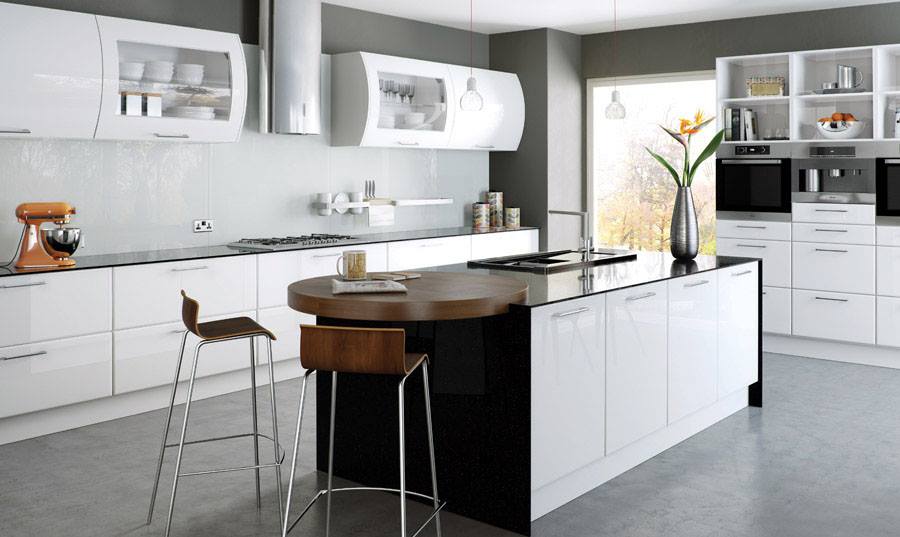

Contemporary vs. transitional kitchen design is the first real decision most Los Angeles homeowners face. Contemporary kitchen style suits people who want a clean architectural look with integrated appliances and confident material choices. Transitional kitchen design suits people who prefer a warmer blend of old and new kitchens, pairing updated functions with familiar details such as Shaker-style doors and neutral palettes. Both deliver lasting beauty and healthy materials when built correctly.
We cover how each style handles cabinetry, appliances, color, storage, and architecture, along with the material and health questions that outlast any trend. A contemporary kitchen portfolio shows sleek minimalism and sharp lines, while a transitional kitchen portfolio shows balanced warmth and timeless appeal. Compare both before you commit.
Key Takeaways
Contemporary kitchens create clean, uncluttered spaces that feel current and architectural. Transitional kitchens balance warmth and familiarity with modern updates. Both can carry smart storage, integrated appliances, and sustainable materials, so the choice rests on visual tone rather than function.
The clearest distinction lies in material expression. Contemporary means in the now and borrows from modern, industrial, and Danish influences to produce a sleek but livable feel. Transitional blends contemporary and traditional elements into a balanced result that avoids harsh edges and dated ornamentation.
|
Design Element |
Contemporary Kitchen Style |
Transitional Kitchen Design |
|
Cabinet doors |
Slab and flat-panel |
Shaker-style recessed panel |
|
Hardware |
Integrated pulls or slim linear bars |
Aged brass, brushed nickel, or matte black |
|
Appliances |
Integrated and panel-ready |
Stainless or panel-ready |
|
Color palette |
High-contrast neutrals with bold accents |
Warm neutrals, cream, taupe, muted blues |
|
Storage |
Hidden and highly planned |
Enclosed and storage-heavy |
|
Overall feel |
Edited, architectural, current |
Warm, balanced, timeless |
|
Suits |
Modern, open-plan, new construction |
Traditional, Spanish, Craftsman, ranch |
Contemporary kitchen style uses minimalist layouts, clean lines, integrated appliances, and streamlined surfaces. The approach treats the kitchen as an architectural statement rather than a decorated room. Sleek, minimalist, and modern kitchen remodeling ideas show how the look borrows high functionality from modernism while keeping livable, familiar touches.
The appeal is precision. Flat-panel cabinetry, hidden storage, and minimal hardware create a calm backdrop for daily life. Contemporary kitchens succeed when homeowners want sharp visual confidence and feel comfortable making deliberate material and color decisions.
Transitional kitchens blend contemporary and traditional styles into bright, relaxed spaces that prioritize storage and neutral palettes. Painted wood or wood-grain Shaker-like cabinetry with recessed-panel doors keeps the familiarity, while modern appliances and layout improvements carry the function.
Contemporary reads cleaner, bolder, and more current. Transitional reads warmer, softer, and easier to live with across a decade or more. Homeowners who want updates without losing warmth or classic architectural cues usually land on transitional design.
Cabinet profiles and appliance integration create the most visible differences between the two styles. Contemporary cabinets favor flat, handleless designs that emphasize horizontal or vertical planes. Transitional cabinets use recessed-panel doors that reference classic woodworking while housing modern hardware.
The choice between slab and Shaker-style doors affects more than appearance. Shaker vs flat-panel kitchen cabinets support different material expressions, hardware strategies, and visual rhythms. Contemporary doors rely on precise proportions and minimal ornamentation, while transitional doors soften modern function with familiar profiles.
Contemporary cabinet profiles feature slab or flat-panel doors with handleless designs, integrated pulls, or minimal hardware that disappears into the cabinetry. Uninterrupted surfaces emphasize the material itself and let countertops, backsplashes, and lighting act as the primary design statements.
Handleless cabinets work through recessed edge pulls or push-latch mechanisms that keep faces smooth. When hardware appears, it reads as slim linear pulls or simple geometric shapes in matte black, stainless, or brushed nickel.
Transitional cabinet profiles use Shaker-like recessed panel doors paired with painted wood or wood-grain cabinetry. The recessed panel references traditional woodworking without heavy molding, so the kitchen feels updated while keeping classic proportions.
Painted wood cabinets in neutral tones dominate transitional kitchens because they give countertops, hardware, and lighting a soft backdrop. The Shaker-style door bridges old and new, traditional enough for warmth and plain enough for modern appliances.
Contemporary appliance strategy relies on integrated or panel-ready units that disappear into cabinetry. Panel-ready refrigerators, dishwashers, and range hoods blend into surrounding cabinets, which lets countertops and materials carry the design personality.
Transitional appliance strategy allows stainless or panel-ready units depending on how much contrast you want. Surrounding cabinetry, trim, and neutral finishes soften stainless. Appliance integration in transitional spaces balances modern function with a furniture-like cabinet appearance and avoids a commercial kitchen feel.
Kitchen color palettes work as decision layers. Contemporary spaces favor high-contrast neutrals with bold accents, while transitional spaces lean on warm neutrals and muted tones. Align the palette with your home's architecture and light, and treat cabinetry, counters, backsplash, hardware, and lighting as one system.
Contemporary palettes create sharp impact through controlled contrast and texture. Transitional palettes build warmth through layered neutrals, soft accents, and natural wood. Limit any palette to three or four core colors plus one or two accent materials.
|
Palette |
Style Direction |
Core Materials |
|
White and charcoal with walnut |
Contemporary |
Flat-panel white cabinets, charcoal island, walnut shelving |
|
Matte black, wood, stainless |
Contemporary |
Black base cabinets, wood uppers, integrated stainless |
|
Warm white, oak, soft brass |
Transitional |
Creamy cabinet paint, oak island, brushed brass hardware |
|
Greige with stone-look counters |
Transitional |
Shaker doors, neutral quartz, brushed nickel fixtures |
|
Muted sage or olive |
Transitional |
Soft green base cabinets, cream uppers, wood details |
|
Blue-gray, white oak, quartz |
Transitional |
Blue-gray island, oak perimeter, light quartz counters |
Contemporary color works through high-contrast neutrals, warm woods, black or metal accents, and stone surfaces. A white and charcoal scheme with walnut accents produces clean contrast with warmth. Countertop and surface selection matters here, since large uninterrupted planes leave nowhere for a weak material to hide.
Contemporary surfaces often include stone-look slabs, waterfall island panels, or full-height backsplashes. Lighting then functions as architecture through under-cabinet strips, shelf illumination, toe-kick LEDs, pendants, or linear fixtures that trace the geometry.
Transitional color relies on white, gray, beige, cream, taupe, natural wood, and muted blues or greens. Warm white cabinets with an oak island and brushed brass hardware deliver warmth without heaviness. Layered lighting design keeps those softer tones from reading flat under bright Los Angeles afternoon light.
Resale-friendly schemes pair Shaker-style doors with neutral quartz and brushed nickel. For more personality, a muted sage or olive base with cream uppers and natural wood details adds color without noise.
Storage planning separates a good kitchen from a generic one, whatever the style. Contemporary storage stays hidden and highly planned to protect the minimal look. Transitional storage runs heavy because the softer visual layer only works over a clutter-free counter.
Kitchens now serve as multiuse workhorses for cooking, homework, remote work, entertaining, and casual dining. Back prep kitchens can add pantry space, a second sink, another dishwasher or oven, and room for material expression that supports the main kitchen.
|
Storage Feature |
Contemporary Application |
Transitional Application |
|
Pantry |
Integrated floor-to-ceiling with flat panels |
Enclosed pantry behind Shaker doors |
|
Small appliances |
Concealed appliance garage |
Dedicated drawer or cabinet zone |
|
Corners |
Pull-out shelving with smooth faces |
Lazy Susan or corner drawer |
|
Deep storage |
Full-extension drawer systems |
Deep pot drawers and pan organizers |
|
Display |
Illuminated cabinets with LED shelving |
Sparingly styled open shelving |
Contemporary storage must stay hidden to protect the low visual clutter. Integrated pantries, pull-out drawer systems, and concealed appliance garages keep counters clear. Kitchen cabinet storage solutions matter more in contemporary designs, where a single exposed item breaks the architectural line.
Floor-to-ceiling cabinetry maximizes vertical storage without visual weight when built with flat panels and integrated pulls. Corner solutions such as lazy Susans or pull-out shelving improve reach while keeping exterior faces smooth.
Transitional storage runs heavy because the style depends on a clutter-free look to hold its warm, balanced character. Open shelving appears sparingly and only when styled with care. Most storage stays enclosed behind Shaker-style doors.
Deep drawers for pots, pan organizers, pull-out spice racks, and dedicated small-appliance zones prevent counter crowding. Kitchen remodel ideas for transitional design show that the blend of old and new depends on modern organization sitting inside classic cabinet profiles.
Prep and multiuse areas strengthen both styles by separating the visible entertaining zone from the working one. A secondary prep space can hold extra pantry storage, a second sink, another dishwasher, a second oven, and finishes that complement the main kitchen.
Contemporary prep areas often extend the main palette with darker cabinetry or bolder materials. Transitional prep areas can introduce natural wood or a muted accent color. Both treat the kitchen as a flexible system rather than a single-purpose room.
The modern farmhouse look sits inside transitional design rather than beside it. It usually includes white or warm-neutral perimeter cabinets, a wood island, Shaker doors, black or aged brass hardware, and stone or quartz-look counters. Its popularity is also its risk.
Farmhouse kitchen ideas work when edited carefully. The strongest versions use clean Shaker cabinetry, restrained hardware, neutral stone, and one or two natural wood accents rather than layering every rustic cue at once.
Farmhouse warmth comes from natural materials, soft neutrals, and practical details. Warm white or cream perimeter cabinets with a natural wood island create contrast without heaviness. Simple Shaker doors hold the familiar proportions, and black or aged brass hardware adds quiet contrast.
An apron-front sink and natural stone or quartz-look counters deliver classic function without barn lighting, open shelving, or distressed finishes. Pick a few signature elements and keep the rest clean. Overdone farmhouse kitchens date quickly because trend signals outrun material quality.
Architecture and lifestyle matter more than inspiration photos. A contemporary kitchen looks out of place in a Spanish Colonial home, just as a heavily traditional kitchen feels forced in a midcentury modern open plan. Strong choices honor the home's character while updating function.
Lifestyle factors include how often you entertain, your tolerance for visible clutter, your daily cooking routine, and how long you plan to stay. Contemporary rewards clear counters and an edited look. Transitional rewards warmth, flexibility, and a design that stays current without demanding perfection.
|
Home Architecture |
Suggested Direction |
Why It Works |
|
Midcentury modern |
Contemporary |
Flat planes and minimal molding match slab cabinetry |
|
Industrial loft or new build |
Contemporary |
Open plans carry bold material contrast |
|
Spanish Colonial |
Transitional |
Warm neutrals and wood echo arches and plaster |
|
Craftsman |
Transitional |
Recessed-panel doors reference original joinery |
|
Ranch or mixed-style |
Transitional |
Neutral palettes bridge inconsistent existing details |
Contemporary kitchens work well in modern homes and open-plan spaces. Midcentury modern, industrial loft, and new construction homes with large windows and minimal molding give the style a natural setting. Contemporary kitchen ideas show how clean geometry and integrated appliances read in those rooms.
Homeowners who entertain often and want a deliberately designed kitchen benefit from contemporary clarity. The style also suits smaller Los Angeles properties, where streamlined cabinetry and integrated appliances protect function without visual clutter.
Transitional kitchens fit traditional, Spanish, Craftsman, ranch, and mixed-style homes because they balance updated function with architectural warmth. Arched doorways, textured walls, wood flooring, and detailed molding all pair well with cabinetry that echoes familiar proportions.
Transitional also suits homeowners weighing resale value or long-term livability. It avoids extreme statements that could narrow the buyer pool while still allowing personal color, material, and layout choices. Families who need heavy storage and flexible work zones tend to prefer it.
Material quality and health matter as much as visual style, because a kitchen lasts 15 to 20 years or longer. Cabinets built with formaldehyde-containing panels can off-gas for years and affect indoor air quality. Style decisions should include material decisions.
Formaldehyde is a colorless, flammable gas found in resins used to make composite wood products, including plywood, particleboard, and fiberboard. The EPA states that exposure may cause adverse health effects and has set limits on emissions from these products, backed by third-party certification.
Formaldehyde-free cabinetry protects long-term health without costing you design flexibility, durability, or finish quality. Custom cabinetry built from UF-free plywood supports both contemporary and transitional styles. Non-toxic cabinetry guidance explains how material choices affect the whole household, especially families with children, pets, or chemical sensitivities.
Bradco Kitchens & Baths builds with UF-free plywood, low-VOC and zero-VOC water-based paints and finishes, and recycled-content surfaces such as PaperStone. That applies to contemporary flat-panel doors, transitional Shaker-style doors, and custom storage. Eco-friendly kitchen cabinets belong in the style conversation, not after it.
Bradco Kitchens & Baths designs kitchens to be as functional as they are beautiful, balancing visual appeal with smart storage, durable materials, and personalized layouts. One team handles custom cabinetry fabrication, layout planning, and installation, so kitchen remodeling decisions do not get lost between separate contractors.
Bring photos, inspiration images, and frustrations to the Bradco Kitchens & Baths showroom at 8455 Beverly Blvd #305 in Los Angeles, and the team will confirm whether contemporary kitchen style or transitional kitchen design fits your home. Custom kitchen cabinets are designed in California and manufactured in our company-owned North American facility, which keeps quality and timeline under one roof.
Whether you prefer the clean architectural lines of contemporary design or the warm blend of old and new that defines transitional spaces, material quality and planning matter as much as the style label. Bradco Kitchens & Baths brings 40+ years of experience, in-house fabrication, and healthy-home materials to kitchens that stay beautiful long after installation.
You do not have to settle the contemporary versus transitional question alone. Bradco Kitchens & Baths has designed, built, and installed Los Angeles kitchens for 40+ years, and a designer can walk your space, review your architecture, and show you door profiles, finishes, and storage hardware side by side. Book a free design consultation to get started.
Call (323) 310-4049 or request your quote online, and contact Bradco Kitchens & Baths today!
A. Contemporary kitchens use flat-panel or slab doors, integrated appliances, and high-contrast palettes to read as an architectural statement. Transitional kitchens use Shaker-style recessed-panel doors, warm neutrals, and natural wood to feel familiar and settled. Both can carry the same storage hardware and the same healthy materials. The difference is visual tone, not function or build quality.
A. Transitional design tends to age gently because neutral palettes and Shaker-style doors appeal to a wide range of buyers. Contemporary kitchens hold value well when the materials are genuinely good, since slab doors and integrated appliances depend on finish quality rather than ornament. Choose durable boxes, quality hinges, and a palette you will still like in ten years.
A. Yes, when the transition is handled deliberately. Spanish Colonial, Craftsman, and 1920s homes carry a contemporary kitchen well if the cabinetry picks up a wood tone or stone found elsewhere in the house. Problems appear when the kitchen ignores the architecture entirely, with stark white slab doors dropped into a room full of arches and textured plaster.
A. A great deal. Composite wood panels made with urea-formaldehyde resins release formaldehyde into the home, and the EPA has set limits on those emissions with third-party certification behind them. UF-free plywood removes that source at the panel level. Pairing it with low-VOC or zero-VOC water-based paints and finishes gives you the largest air-quality gain available in a kitchen remodel.
A. Yes. Refacing replaces doors and drawer fronts on your existing boxes, so a slab door in rift-cut white oak produces a contemporary result and a slim shaker door produces a transitional one. Bradco Kitchens & Baths builds fully custom replacement doors instead of pulling from a stock catalog. Interior changes such as roll-out shelves, added drawers, hardware, and LED lighting happen in the same project.
 Jessica Kienzl
BOOK AN APPOINTMENT